
If you’ve ever received a quick reply that simply said “MB”, you probably paused for a moment and wondered what it meant. In the fast-moving world of texting and social media, people often shorten words to save time, and MB is one of those small abbreviations that can carry surprisingly different meanings depending on context.
People search for “MB mean in text message” because they see it in chats but aren’t sure how to interpret it. Is it an apology? Is it a typo? Or does it mean something completely different?
The confusion comes from the fact that MB can represent multiple phrases, and the correct meaning often depends on the tone of the conversation, the platform being used, and the relationship between the people chatting.
In this guide, we’ll break down what MB means in text messages, how it’s used in real conversations, and when it might be misunderstood. By the end, you’ll recognize it instantly and respond with confidence.
MB Mean in Text Message – Quick Meaning
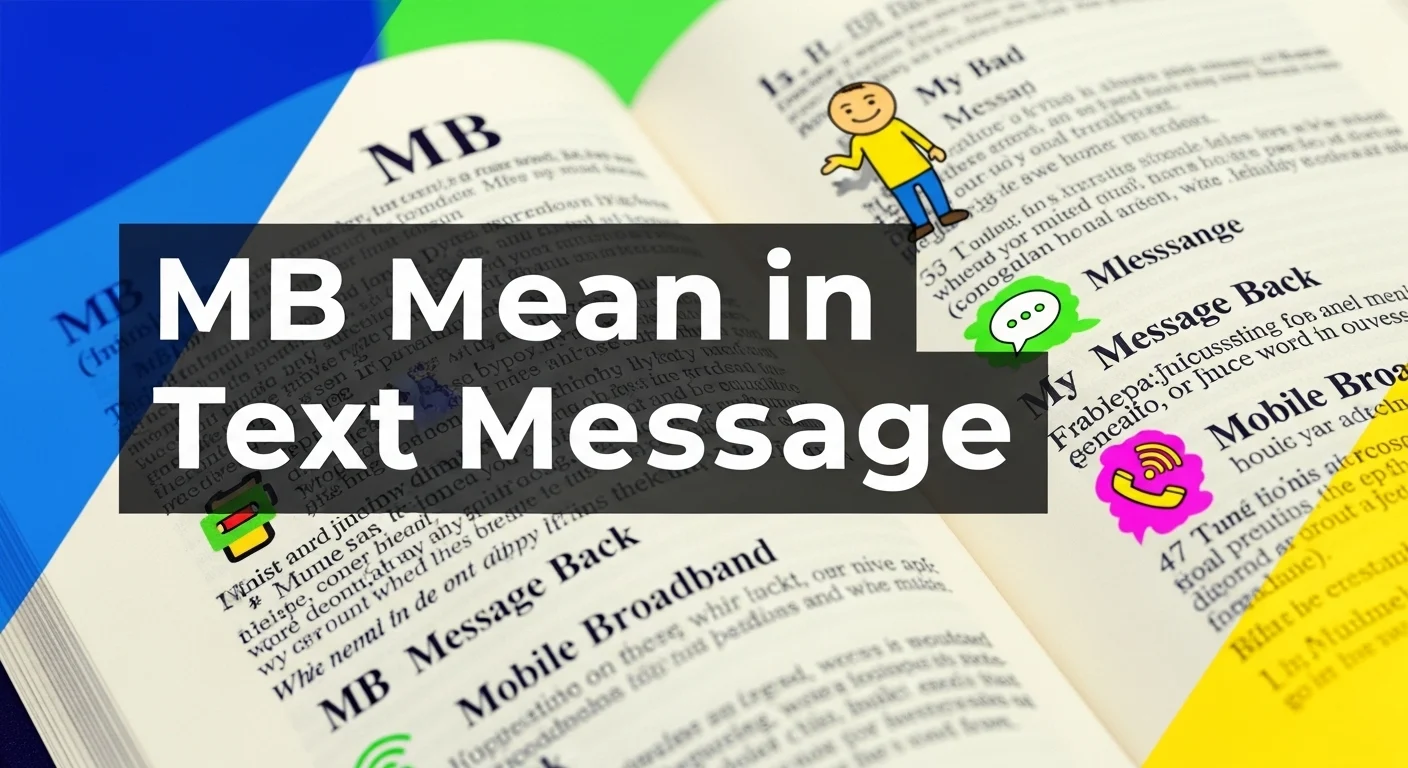
In texting and online conversations, MB most commonly means “My Bad.”
It’s a casual way to admit a mistake or apologize quickly.
Simple Definition
MB = My Bad
Meaning:
- A quick apology
- A casual acknowledgment of a mistake
- A relaxed way to take responsibility
Example Messages
“MB, I forgot to reply earlier.”
“MB, that was my mistake.”
“Oops, MB. I thought the meeting was tomorrow.”
In most conversations, MB carries a friendly tone rather than a serious apology.
Origin & Background
The phrase “My bad” existed long before texting became popular.
It originally appeared in American street slang and basketball culture during the 1970s and 1980s. Players would say “my bad” after making a mistake during a game.
For example:
“I missed the pass. My bad.”
Over time, the phrase moved into everyday conversation. When texting became common in the early 2000s, people started shortening it.
“My bad” became simply MB.
Social Media Influence
Platforms like:
- Snapchat
- TikTok
encouraged faster communication.
Short abbreviations became the norm because they are:
- faster to type
- casual
- expressive
Today, MB is widely recognized across messaging platforms as a quick apology.
Real-Life Conversations
Here are realistic examples of how MB appears in everyday chats.
WhatsApp Conversation
Person A:
Hey, did you send the file?
Person B:
MB, I totally forgot. Sending it now.
Instagram DM
Person A:
You left me on read yesterday 😅
Person B:
MB! I opened it during class and forgot to reply.
TikTok Comments
User 1:
Bro you tagged the wrong account.
User 2:
MB 😂 fixing it now.
Text Message
Person A:
The movie started at 7, not 8.
Person B:
MB, I read the schedule wrong.
These examples show how MB keeps conversations light while admitting a mistake.
Emotional & Psychological Meaning
Even though MB is only two letters, it reflects an important part of modern communication: quick accountability.
When someone says MB, they are usually expressing:
- acknowledgment of a mistake
- casual apology
- willingness to move forward
Unlike formal apologies like “I sincerely apologize,” MB keeps the mood relaxed.
Why People Prefer It
People use MB because it:
- feels friendly
- reduces awkwardness
- keeps conversations moving
A Real-Life Scenario
Imagine texting a friend about dinner plans.
You accidentally send the wrong location.
Instead of writing a long explanation, you simply reply:
“MB, wrong address.”
Your friend understands immediately, and the conversation continues smoothly.
That simplicity is why abbreviations like MB thrive in digital communication.
Usage in Different Contexts
Understanding where MB works best helps avoid confusion.
Social Media
On platforms like Instagram or TikTok, MB appears frequently.
Example:
“MB, typo in the caption.”
It keeps interactions casual and quick.
Friends & Relationships
Among friends, MB is extremely common.
Example:
“MB, I forgot your birthday message earlier.”
The tone stays light and friendly.
Work or Professional Settings
In professional communication, MB is usually too informal.
Instead of saying:
“MB for the delay.”
A better message would be:
“Sorry for the delay.”
Professional settings typically require more polished language.
Casual vs Serious Tone
Casual context:
MB works perfectly.
Serious context:
A fuller apology is usually better.
Example:
Casual:
“MB, wrong link.”
Serious:
“I sincerely apologize for the mistake.”
When NOT to Use It
Although MB is popular, it isn’t always appropriate.
Formal Communication
Avoid it in:
- job emails
- academic messages
- professional meetings
Serious Situations
If the mistake is significant, MB may sound dismissive.
Example of what not to do:
“MB for missing the deadline.”
This may seem careless.
Cultural Sensitivity
Not everyone understands texting abbreviations. Older users may find them confusing.
Common Misunderstandings
Because MB has multiple meanings in other contexts, people sometimes misinterpret it.
Possible Confusions
- Megabytes (MB) in technology
- Maybe (MB) in rare texting contexts
- Typo or random letters
However, in most casual conversations, MB almost always means “My Bad.”
Tone also matters.
For example:
“MB.”
could feel slightly blunt.
While:
“MB 😅”
feels friendlier.
Comparison Table
| Expression | Meaning | Tone |
|---|---|---|
| MB | My bad | Casual apology |
| Sorry | Apology | Neutral |
| My fault | Taking responsibility | Direct |
| Oops | Small mistake | Playful |
| My mistake | Formal acknowledgment | Slightly formal |
| No worries | Opposite reaction | Reassuring |
Key Insight
While MB is quick and friendly, it works best in relaxed conversations. When tone or professionalism matters, a fuller apology communicates more respect and clarity.
Variations / Types
Here are several variations related to MB and casual apology language.
1. My Bad
Full phrase meaning “I made a mistake.”
2. My Fault
A slightly more serious version.
3. Oops
Playful acknowledgment of a mistake.
4. Sorry
Standard apology used everywhere.
5. My Mistake
Common in both casual and semi-formal communication.
6. That’s on Me
A modern slang phrase for taking responsibility.
7. My Slip
Less common phrase meaning a small error.
8. I Messed Up
More emotional admission of a mistake.
9. My Goof
Lighthearted acknowledgment of a minor mistake.
10. My Error
More formal expression.
How to Respond When Someone Uses It
When someone sends MB, your response depends on the situation.
Casual Replies
“No worries.”
“It’s all good.”
“All good 👍”
Funny Replies
“Apology accepted… this time 😄”
“You owe me coffee now.”
“Strike one!”
Mature Replies
“Thanks for letting me know.”
“I appreciate the honesty.”
“No problem, mistakes happen.”
Respectful Replies
“Thank you for clarifying.”
“Understood.”
“Thanks for correcting that.”
Regional & Cultural Usage
The interpretation of MB can vary slightly across cultures.
Western Culture
In the US, UK, and Canada, MB is widely understood as “my bad.”
It’s common among younger generations.
Asian Culture
Many people understand it through global internet culture, though full phrases like “sorry” are still more common.
Middle Eastern Culture
English texting slang is widely used among younger users. However, MB might be less common than “sorry” in formal interactions.
Global Internet Culture
Online gaming, TikTok comments, and Discord chats have helped MB spread internationally.
Gamers often use it after making mistakes.
Example:
“MB team, wrong move.”
Generational Differences
Gen Z
- Uses MB frequently
- Comfortable with abbreviations
Millennials
- Understand MB
- Often mix abbreviations with full phrases
Older generations
- May prefer complete sentences
- Sometimes misunderstand abbreviations
Is It Safe for Kids?
Yes, MB is generally safe for kids.
It simply means “my bad”, which is a casual way to admit a mistake.
However, parents should still encourage children to understand when informal language is appropriate, especially in school or professional communication later in life.
Learning when to switch between casual slang and formal language is an important communication skill.
FAQs
What does MB mean in text?
MB usually means “My Bad,” which is a casual way to say you made a mistake.
Is MB the same as saying sorry?
Not exactly. MB is more casual and lighthearted than a formal apology.
Can MB mean something else?
Yes, in technical contexts MB can mean megabytes, but in texting it usually means “my bad.”
Is MB rude?
No. It’s typically friendly, but in serious situations it might sound too casual.
Do people still use MB?
Yes. It’s still common in texting, gaming chats, and social media conversations.
Should I use MB in work messages?
It’s better to avoid it in professional communication and use “sorry” or “I apologize.”
Conclusion
The abbreviation MB in text messages usually means “My Bad,” a quick and casual way to admit a mistake. It reflects how modern communication has evolved—short, fast, and conversational.
People use it because it keeps interactions relaxed and honest. Instead of long explanations, two simple letters acknowledge responsibility and move the conversation forward.
However, like many texting abbreviations, context matters. MB works best among friends, in casual chats, and on social media. In professional or serious situations, a more complete apology communicates greater respect.