

In the age of digital communication, a single emoji can carry more weight than a paragraph. Hearts, in particular, have become a universal symbol, popping up in texts, DMs, and comments daily. But what do hearts really mean in text? Is a red heart always romantic? Does a yellow heart signify friendship, or is it just a stylistic choice? Understanding these nuances can prevent miscommunication and help you convey your feelings more effectively.
People search this question because hearts can be confusing. One person may use a heart casually, while another may intend deep emotional meaning. This guide unpacks the meanings, history, and real-life usage so you can navigate digital conversations confidently.
Quick Meaning of Hearts in Text
A heart emoji is a versatile symbol used to express emotions, affection, or approval. Its exact meaning depends on the color, context, and relationship between the sender and receiver.
Common meanings:
- ❤️ Red Heart – Deep love, passion, romantic affection
- 💛 Yellow Heart – Friendship, warmth, happiness
- 💚 Green Heart – Health, nature, jealousy in some cases
- 💙 Blue Heart – Trust, loyalty, calmness
- 💜 Purple Heart – Compassion, admiration, creativity
- 🖤 Black Heart – Dark humor, sorrow, sarcasm
- 🤍 White Heart – Pure intentions, support, peace
Examples in text:
- “Can’t wait to see you! ❤️”
- “Congrats on your promotion! 💛”
- “Thanks for being an amazing friend 💚”
Origin & Background
The heart symbol has roots dating back to the Middle Ages, initially representing spiritual love or devotion. By the 19th century, it evolved into a romantic symbol in Western culture. The digital era amplified its usage, and platforms like WhatsApp, Instagram, and TikTok made it mainstream.
Social media has added layers of meaning. A red heart on Instagram may signal admiration, while a 💛 in a TikTok comment could indicate a friendly vibe. Over time, users began experimenting with different colors to express subtle emotional tones.
Real-Life Conversations
WhatsApp:
Person A: “Had the best weekend with you ❤️”
Person B: “Same here! Can’t wait for next time 💛”
Instagram DMs:
Person A: “Your new artwork is stunning 💜”
Person B: “Thank you! That means so much 🤍”
TikTok Comments:
Person A: “This song hits different 🖤”
Person B: “Right? Been on repeat all day ❤️”
Text Messages:
Person A: “Congrats on your exam results! 💚”
Person B: “Thanks! Couldn’t have done it without you 💛”
Emotional & Psychological Meaning
Hearts convey emotions more efficiently than words. They signal appreciation, affection, or intimacy. Psychologically, using hearts reduces ambiguity and fosters connection in digital communication.
Scenario: You text a friend a joke, and they respond with a 💛. It shows warmth and lighthearted support, creating a sense of closeness without needing a long reply. Hearts act as emotional shorthand for humans navigating fast-paced communication.
Usage in Different Contexts
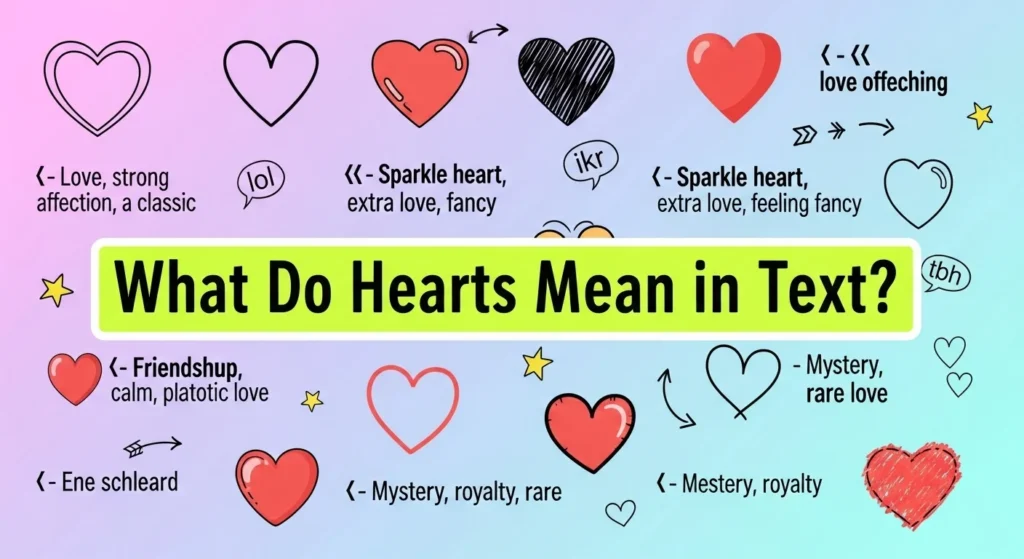
- Social Media: Likes, admiration, or approval in posts or comments
- Friends & Relationships: Show care, friendship, or romance depending on color
- Work / Professional Settings: Generally used sparingly; a 💛 or 🤍 can indicate appreciation without crossing professional boundaries
- Casual vs Serious Tone: Red hearts convey serious emotion, while yellow or blue hearts are lighter and more casual
When NOT to Use It
- Avoid sending romantic-colored hearts to professional contacts
- Consider cultural sensitivities; some cultures may view overt affection online as inappropriate
- Misunderstanding can occur if the recipient interprets a heart as romantic when it was intended as friendly
Common Misunderstandings
- Tone confusion: A red heart might be misread as romantic in a platonic conversation
- Literal vs figurative: Hearts don’t always represent love; they can signify support, approval, or humor
- Overuse: Excessive heart emojis can dilute meaning or appear insincere
Comparison Table
| Emoji / Symbol | Meaning | Use Case | Opposite / Related |
|---|---|---|---|
| ❤️ Red Heart | Romantic love | Partner, crush | 💔 Broken heart |
| 💛 Yellow Heart | Friendship | Friends, lighthearted | 🖤 Black heart |
| 💚 Green Heart | Health, nature, jealousy | Fitness, plants, playful jealousy | 💙 Blue heart |
| 💜 Purple Heart | Compassion, admiration | Art, mentorship | 🤍 White heart |
| 🖤 Black Heart | Dark humor, sorrow | Jokes, grief | ❤️ Red heart |
Key Insight: Hearts are dynamic symbols. Color and context change their meaning, so understanding intent is crucial for accurate communication.
Variations / Types of Hearts
- ❤️ Red Heart – Romantic or deep affection
- 💛 Yellow Heart – Friendship, happiness
- 💚 Green Heart – Health, nature, jealousy
- 💙 Blue Heart – Loyalty, trust
- 💜 Purple Heart – Admiration, compassion
- 🖤 Black Heart – Dark humor, grief
- 🤍 White Heart – Pure intentions, peace
- 💖 Sparkling Heart – Excitement, adoration
- 💗 Growing Heart – Strengthening feelings
- 💓 Beating Heart – Emotional intensity
How to Respond When Someone Uses It
- Casual reply: “Thanks! 💛”
- Funny reply: “Oh, now you’re making me blush 😆❤️”
- Mature reply: “I appreciate this. It means a lot 💜”
- Respectful reply: “Your support always matters 🤍”
Regional & Cultural Usage
- Western culture: Often romantic or friendly; colors carry nuanced meanings
- Asian culture: Hearts are playful and decorative, often used in casual conversations
- Middle Eastern culture: Hearts are less common publicly, often reserved for close relationships
- Global internet usage: Universally recognized, but color meanings vary slightly
- Generational differences: Gen Z prefers colored hearts for casual context; Millennials may stick to ❤️ or 💛
Is It Safe for Kids?
Yes, generally safe, but context matters. Hearts should be used with awareness of who they are communicating with to avoid misunderstandings or unwanted attention.
FAQs
Q1: Does a red heart always mean love?
A1: Not necessarily. It can signify deep appreciation or friendship, depending on context.
Q2: Can a yellow heart mean romantic feelings?
A2: Usually, it represents friendship, but some may use it playfully in flirtation.
Q3: Is a black heart negative?
A3: It can indicate dark humor, sarcasm, or mourning; context is key.
Q4: Are hearts appropriate in work chats?
A4: Use sparingly; neutral colors like 🤍 or 💛 are safest.
Q5: Why do people overuse heart emojis?
A5: It’s often to emphasize warmth or enthusiasm, but overuse can reduce impact.
Q6: What does a sparkling heart mean?
A6: Excitement, admiration, or special affection.
Q7: Can hearts cause misunderstandings online?
A7: Yes. Misinterpreting color or context can create confusion about intent.
Conclusion
Hearts are more than decorative symbols—they’re a nuanced language of emotion. From casual friendship 💛 to deep love ❤️, they help convey feelings swiftly and meaningfully. By understanding their colors, contexts, and cultural nuances, you can communicate confidently and avoid misinterpretations. Use them thoughtfully, and they become a bridge for connection in today’s fast-paced digital world.