If you’ve ever received a message that simply says “hry” and paused for a second, you’re not alone.
Many people search what do hry mean in text because it looks unfamiliar, slightly incomplete, or even confusing. Is it a typo? A code? A new trend?
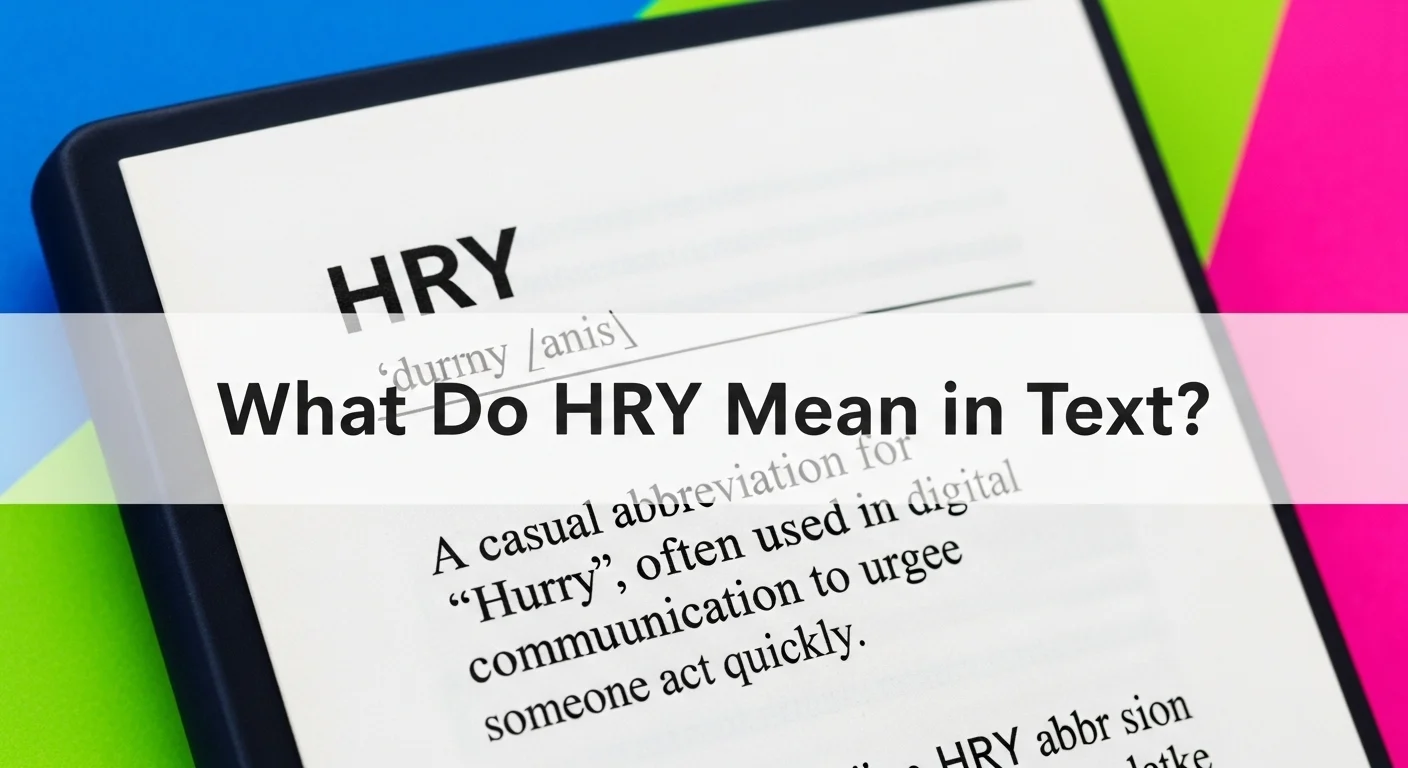
The short answer: “hry” means “How are you?”
But the full story is more interesting than that. Let’s unpack where it came from, how it’s used, and what it really says about modern communication.
HRY – Quick Meaning
HRY is an informal abbreviation of “How are you?”
It’s commonly used in:
- Text messages
- Instagram DMs
- WhatsApp chats
- Snapchat or TikTok comments
Instead of typing the full sentence, someone writes:
- “hry”
- “Hry?”
- “hryy”
Example:
- “Hey, hry?”
- “Long time no talk, hry?”
- “Hry bro?”
It’s quick, casual, and often used to start a conversation.
Origin & Background
HRY emerged from the culture of speed.
As texting became more common in the early 2000s, people shortened phrases to save time and characters. Just like “u” replaced “you” and “wyd” replaced “what are you doing,” “hry” became a shortcut for “how are you.”
Social media amplified it.
Platforms like Instagram, Snapchat, and later TikTok normalized ultra-short expressions. Messaging culture shifted toward efficiency. Typing full sentences sometimes felt unnecessary, especially among younger users.
Over time, the abbreviation became less about saving characters and more about signaling casual tone.
It feels relaxed.
Uncomplicated.
Low effort—but friendly.
Real-Life Conversations
Here’s how “hry” actually shows up in everyday chats.
1. WhatsApp Chat
Person A: Hry?
Person B: I’m good 😊 just got home from work. You?
Person A: Same. Long day!
Short. Warm. Simple check-in.
2. Instagram DMs
Person A: Heyy hry
Person B: I’m okay. Surviving finals week 😭
Person A: You got this!
Notice how it opens the door without sounding formal.
3. TikTok Comment
Person A: Hry bestie 😂
Person B: Not you checking on me in the comments
Person A: Always.
Here it’s playful and public.
4. Text Message After a Fight
Person A: Hry…
Person B: I’m fine.
Person A: Can we talk later?
The same word can carry emotional weight depending on context.
Emotional & Psychological Meaning

On the surface, “hry” is just a greeting.
But emotionally, it signals something deeper: a desire for connection with minimal pressure.
People use it because:
- It feels lighter than a full sentence.
- It lowers emotional intensity.
- It creates space for conversation without sounding overly formal.
I’ve seen this especially among younger users who want to reconnect after silence. Instead of writing a long message explaining the gap, they send a simple “hry.” It acts like a gentle knock on the door.
Psychologically, it reflects modern communication habits:
- Low commitment starters
- Casual vulnerability
- Efficient emotional check-ins
It says: “I’m here. Are you okay?”
Without overthinking.
Usage in Different Contexts
1. Social Media
On platforms like Instagram or Snapchat, “hry” is common in DMs. It’s a conversation opener.
It feels informal and friendly.
2. Friends & Relationships
Among friends, it’s normal.
In relationships, tone matters. “Hry” after a disagreement may feel distant. “Hryyy ❤️” feels affectionate.
Tiny spelling changes can change emotional meaning.
3. Work / Professional Settings
Avoid it.
In professional communication, use:
- “How are you?”
- “I hope you’re doing well.”
HRY may appear careless or immature in formal settings.
4. Casual vs Serious Tone
- Casual: “hry bro”
- Neutral: “Hry?”
- Emotional: “hry…”
Punctuation changes everything.
When NOT to Use It
Avoid “hry” in:
- Job interviews
- Emails to teachers or clients
- Formal business communication
- Serious discussions about sensitive topics
It can seem dismissive in emotionally heavy conversations.
For example, if someone shares difficult news, replying with “hry” later may feel disconnected.
Also consider cultural context. In some regions, shortening words can appear disrespectful.
Common Misunderstandings
- Thinking it’s a typo
Some people assume the sender made a mistake. - Confusing tone
Is it caring? Lazy? Flirty? Tone depends on context. - Assuming emotional distance
Because it’s short, some interpret it as low effort. - Literal vs Emotional Meaning
While it literally means “How are you?”, emotionally it can mean:
- “I miss you.”
- “Let’s talk.”
- “Are we okay?”
Modern text language often hides deeper intention.
Comparison Table
| Expression | Meaning | Tone | Usage Level |
|---|---|---|---|
| HRY | How are you? | Casual | Very informal |
| HYD | How you doing? | Casual | Informal |
| WYD | What you doing? | Curious | Casual |
| Sup | What’s up? | Friendly | Informal |
| Hello | Greeting | Neutral | Universal |
| GM | Good morning | Polite | Semi-formal |
Key Insight
HRY stands out because it’s specifically about emotional status, not just greeting. It’s short—but emotionally targeted.
Variations & Types
Here are common variations you might see:
- Hryy – Extra “y” adds friendliness.
- Hryyy – Playful or flirty tone.
- Hry bro – Casual male friendship vibe.
- Hry sis – Friendly feminine tone.
- Hry? – Direct and neutral.
- Hry… – Hesitant or emotional.
- Hry 😊 – Warm and caring.
- Hry lol – Lighthearted check-in.
- Hry stranger – Reconnecting after silence.
- Hry bestie – Close friendship tone.
Small tweaks change emotional color.
How to Respond When Someone Uses It
Casual Replies
- “I’m good, you?”
- “Doing alright!”
Funny Replies
- “Alive and dramatic.”
- “Mentally on vacation.”
Mature Replies
- “I’ve been reflecting lately. It’s been a busy week.”
- “I’m doing better now, thanks for asking.”
Respectful Replies
- “I’m well. Hope you are too.”
- “Thank you for checking in.”
Your reply sets the direction of the conversation.
Regional & Cultural Usage
Western Culture
In the US, UK, and Canada, short slang is common among younger users. It feels normal in informal chats.
Asian Culture
In countries like India, Pakistan, and the Philippines, texting shortcuts are widely adopted among youth. However, older generations may view them as careless.
Middle Eastern Culture
Respectful tone matters more in formal contexts. Among friends, slang is fine. With elders, full phrases are preferred.
Global Internet Usage
On global platforms like Instagram and TikTok, abbreviations dominate because brevity wins attention.
Generational Differences
- Gen Z: Comfortable using “hry” daily.
- Millennials: May use it casually but still value full sentences in important chats.
- Older Generations: Often prefer traditional greetings.
Language reflects generational comfort with digital minimalism.
Is It Safe for Kids?
Yes, “hry” is harmless.
It simply means “How are you?”
However, parents should guide children on tone awareness—understanding when casual language is appropriate and when formal communication is required.
Teaching context matters more than banning slang.
FAQs
1. Is “hry” rude?
Not inherently. It depends on context and tone.
2. Is “hry” flirty?
It can be, especially with extra letters like “hryyy.”
3. Is “hry” grammatically correct?
No. It’s informal slang, not proper English.
4. Why do people shorten “how are you” to “hry”?
Speed, convenience, and casual tone.
5. Can I use “hry” in emails?
No. Avoid it in professional communication.
6. Does “hry” mean something else?
In texting, it almost always means “How are you?”
7. Is it common worldwide?
Yes, especially among younger social media users.
Conclusion
So, what do hry mean in text?
It simply means “How are you?”—but in a faster, lighter, more modern way.
It reflects how digital communication has evolved. Shorter words. Softer emotional openings. Low-pressure connection starters.
Used correctly, it feels friendly.
Used in the wrong setting, it feels careless.
Like most slang, it’s not about the letters.
It’s about context, tone, and intention.
Now that you understand it, you can respond confidently—and maybe even use it yourself when the moment feels right.