
In the age of instant messaging, texting, and social media, new slang appears almost daily. One term that often confuses people, especially those newer to online conversations, is “lag.” If you’ve seen someone type “sorry, lag” or “you’re lagging,” you might have paused and wondered: what does lag mean in text?
This article dives deep into the meaning, origin, usage, and cultural context of lag in messaging. By the end, you’ll not only understand the term but also feel confident using it appropriately.
What Does Lag Mean in Text – Quick Meaning
In texting and online chats, lag generally refers to a delay. This can be literal, technical, or metaphorical.
Key points:
- Technical delay: When messages are slow due to internet issues.
- Response delay: When someone is slow to reply, either because they’re busy or distracted.
- Emotional/figurative lag: Can imply someone is “behind” in understanding or reacting.
Examples:
- “Sorry for the late reply, my phone lagged.”
- “You’re lagging, did you see my last message?”
- “Lag is real today, the app keeps freezing.”
Origin & Background
The word lag has roots in old English, meaning “to fall behind” or “delay.” In the digital age, it first became popular in online gaming, where a slow internet connection would cause a player to “lag,” meaning their actions were delayed on-screen.
Social media and texting borrowed this term to describe any kind of delay: slow replies, app freezes, or even moments when someone doesn’t catch up on a conversation. Its evolution shows the blending of tech jargon with everyday communication.
Real-Life Conversations
Here are some realistic examples from modern messaging platforms:
WhatsApp
Person A: “Hey, did you see my last message?”
Person B: “Ahh lag, just got it now 😅”
Instagram DM
Person A: “Wanna meet at 7?”
Person B: “Lagged behind on notifications. 7 works!”
TikTok Comment
User1: “This trend is so funny lol”
User2: “Lagged on this one, just saw it now 😂”
Text Message
Mom: “Dinner’s ready!”
Teen: “Lag… coming in 5 mins 🙃”
These conversations highlight how lag communicates delay in a friendly, casual tone.
Emotional & Psychological Meaning
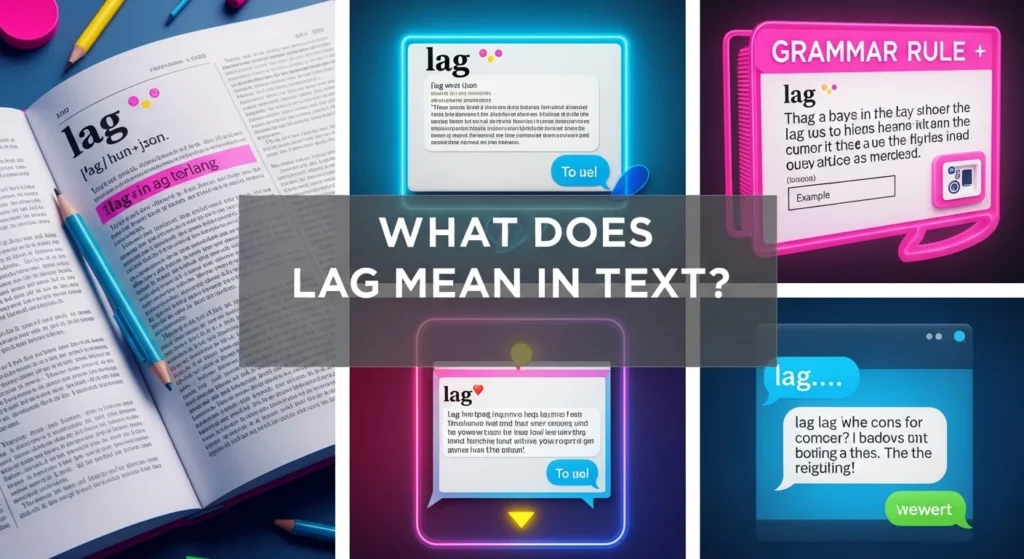
Using lag is often more than technical—it reflects emotion.
- Frustration: When someone’s device or connection slows down.
- Playfulness: Teasing friends for slow replies.
- Awareness: Shows attentiveness and acknowledgment of delay.
Scenario: Imagine texting a friend about plans, and they reply hours later with “lag lol.” It conveys a casual apology while maintaining humor. This subtle emotional layer makes modern texting feel personal yet concise.
Usage in Different Contexts
Social Media: Casual and humorous; often paired with emojis.
Friends & Relationships: Friendly teasing for slow responses.
Work / Professional: Use carefully; may imply unprofessional delays if misunderstood.
Casual vs Serious Tone: Fine in informal chats; avoid in urgent or sensitive contexts.
When NOT to Use It
- Avoid in formal emails or work communication where delays are unacceptable.
- Avoid using it with elders or in cultures unfamiliar with internet slang.
- Misuse may cause misunderstanding if the recipient interprets it as laziness or disrespect.
Common Misunderstandings
- People may confuse lag with laziness instead of delay.
- Tone can be lost in text, making “lag” seem passive-aggressive.
- Literal vs figurative: tech issues vs slow replies can be conflated.
Comparison Table
| Term | Meaning | Tone |
|---|---|---|
| Lag | Delay / slow response | Casual |
| AFK | Away from keyboard | Informal |
| Slowpoke | Someone physically or mentally slow | Teasing |
| Delay | Formal postponement | Neutral |
| Glitch | Technical malfunction | Tech slang |
Key Insight: Lag uniquely bridges technical and social contexts, making it versatile in online conversation.
Variations / Types
- Internet lag: Slow connection issues.
- Reply lag: Delayed responses in chat.
- Game lag: Slow gameplay due to network.
- Notification lag: Late alert or missed message.
- Emotional lag: Slow to react emotionally in a conversation.
- Typing lag: Delay between typing and sending.
- Video lag: Streaming delays.
- App lag: Freezing or crashing apps.
- Friend lag: Someone slow to understand a joke or topic.
- Event lag: Delay in coordination or plans.
How to Respond When Someone Uses It
- Casual: “No worries, lag happens 😅”
- Funny: “Lagging like my Wi-Fi lol”
- Mature: “Thanks for letting me know, I understand”
- Respectful: “I appreciate the heads-up about the delay”
Regional & Cultural Usage
- Western Culture: Common in casual texting; often humorous.
- Asian Culture: Increasingly used online, mainly in gaming and social apps.
- Middle Eastern Culture: Younger generations adopt internet slang in informal chats.
- Global Internet Usage: Recognized worldwide among tech-savvy users.
- Generational Differences: Gen Z uses it freely in text and memes; Millennials use it occasionally, mostly acknowledging tech delays.
Is It Safe for Kids?
Yes, in general context—but monitor to ensure it isn’t paired with inappropriate content or sarcasm that children may misinterpret.
FAQs
1. Is “lag” only about internet problems?
No, it can refer to any delay, technical or conversational.
2. Can I use “lag” in work emails?
Only in informal internal chats; avoid in formal communication.
3. Does “lag” have a negative tone?
Not usually; it’s casual and often playful.
4. How is it different from “AFK”?
AFK means away, lag implies delay, not absence.
5. Is “lag” a modern term?
Its tech meaning is modern, but “lag” as a delay has historical roots.
6. Can “lag” describe people too?
Yes, someone slow to respond or act can be said to be lagging.
7. Is it understood globally?
Mostly among internet users; context matters in offline conversations.
Conclusion
Understanding what lag means in text opens a window into modern communication. It’s more than a technical term—it conveys emotion, humor, and connection. From playful teasing to acknowledging delays, lag reflects the pace of our digital lives. By grasping its context and nuances, you can use it confidently, keeping conversations friendly, relatable, and modern.