
If you’ve ever opened a chat and seen someone type “nun,” you’re not alone in feeling confused. It looks like a typo, but in texting and social media slang, it actually carries meaning that depends heavily on tone and context.
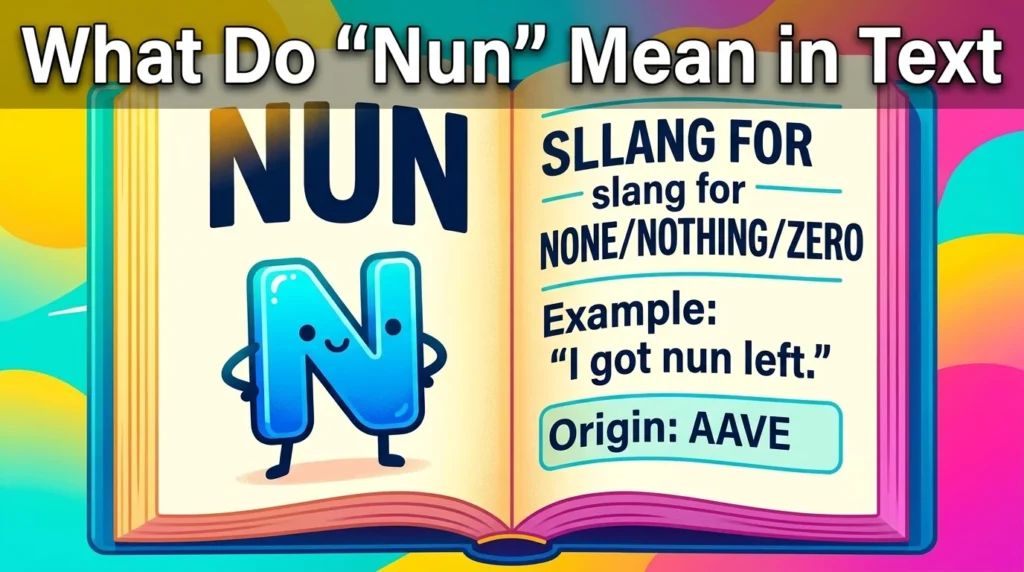
Most people search “what do nun mean in text” because they see it on Snapchat, TikTok, or in casual DMs and assume it’s a coded word. In reality, it’s often just a relaxed, shorthand way of saying “none” or “nothing.”
But here’s where it gets interesting: the emotion behind it can change completely depending on who sends it and how it’s used.
Nun Meaning – Quick Meaning
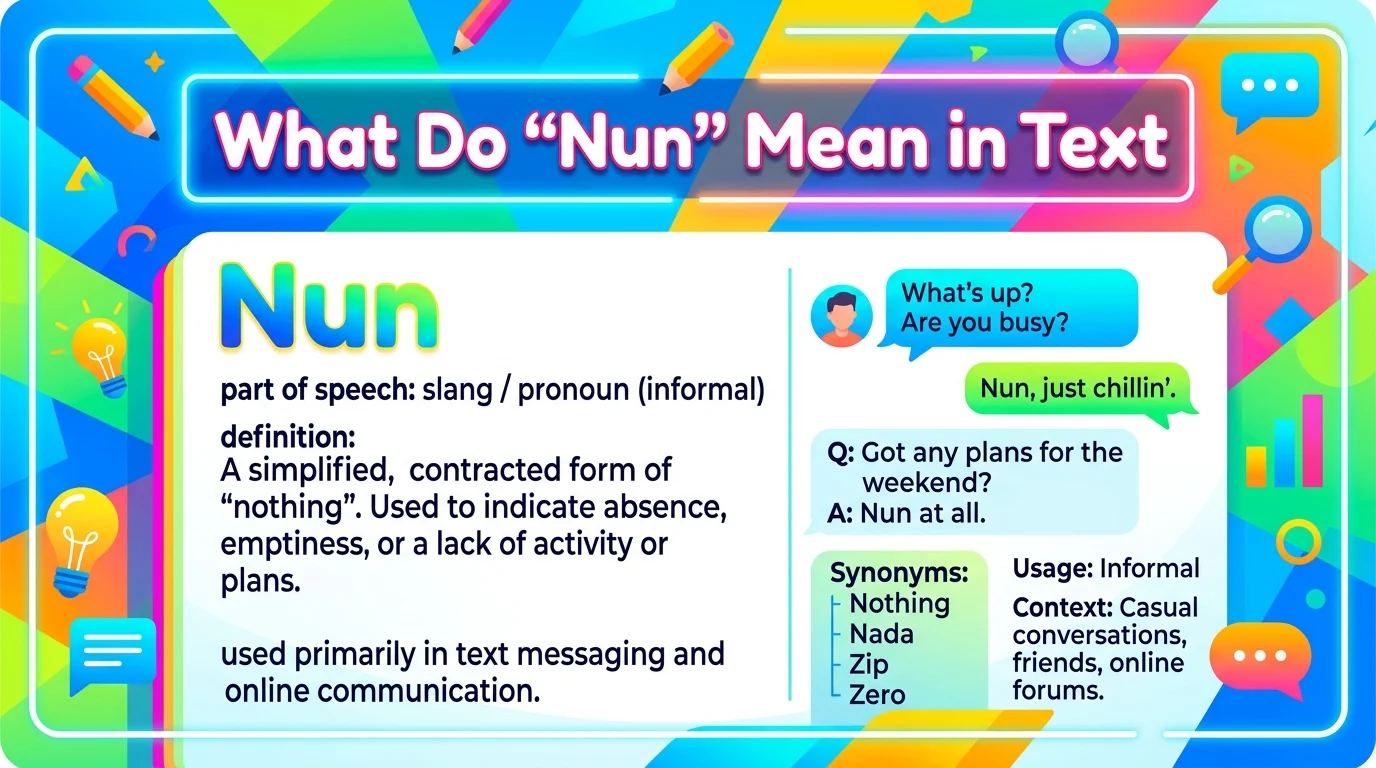
In most texting situations, “nun” is slang for:
- “None”
- “Nothing”
- “Not anything”
It is usually a fast, casual, and unbothered way of replying.
Examples in chat:
- “What you doing?” → “nun”
- “You got plans?” → “nun fr”
- “What happened?” → “nun just chilling”
In short, it’s a shortcut version of “nothing going on.”
Origin & Background
The word “nun” didn’t come from formal English. It evolved naturally through fast typing habits, especially in early internet chatrooms and mobile texting.
People started dropping letters from “none” and “nothing,” and “nun” became a quick phonetic shortcut.
Social media platforms like TikTok and Snapchat helped it spread further because:
- Short replies feel more natural in fast chats
- Gen Z communication prefers minimal typing
- Tone matters more than grammar online
Over time, “nun” became less about spelling and more about attitude—calm, uninterested, or casually relaxed.
Real-Life Conversations
WhatsApp Chat
Person A: What are you up to tonight?
Person B: nun fr, just at home
Person A: You coming out?
Person B: nah, nun today
Instagram DMs
Person A: Why you so quiet lately?
Person B: nun rlly, just been busy
Person A: You mad at me?
Person B: no lol nun like that
TikTok Comments
User A: What’s going on in this video?
User B: nun just chaos 😂
User A: Did something happen?
User B: nun serious, it’s just a trend
Snapchat Streak Chat
Friend A: What’s new?
Friend B: nun ngl
Friend A: You okay?
Friend B: yeah, nun bad
Emotional & Psychological Meaning
While “nun” literally means “nothing,” emotionally it can carry deeper meaning depending on tone.
People often use it to express:
- Emotional neutrality
- Low effort communication
- Feeling tired or unbothered
- Wanting to avoid long explanations
For example, someone saying “nun” instead of “nothing much, just tired” may actually be emotionally drained but not wanting to elaborate.
In real life, I’ve noticed in everyday conversations that short replies like this often appear when someone is mentally overwhelmed but still trying to stay socially present.
It’s less about the word—and more about emotional distance.
Usage in Different Contexts
Social Media
On TikTok, Instagram, or Snapchat, “nun” is used for quick replies, captions, or comments.
- “What you doing?” → “nun”
- “Day going?” → “nun fr”
Friends & Relationships
Among friends, it feels casual and effortless.
- Shows comfort and familiarity
- Can signal boredom or relaxation
Work / Professional Settings
Avoid using it. It sounds unprofessional and unclear.
Instead of “nun,” say:
- “Nothing at the moment”
- “No updates right now”
Casual vs Serious Tone
- Casual: normal and common
- Serious: can feel dismissive or cold
When NOT to Use It
There are situations where “nun” can easily be misunderstood:
- Formal conversations (job, school emails)
- Emotional discussions where clarity matters
- Arguments (it may seem dismissive)
- Talking to elders or authority figures
In sensitive moments, short slang can feel like you don’t care—even if you do.
Common Misunderstandings
Many people think:
- “Nun” is a typo of “nun (religious term)” → Incorrect
- It means something secret or coded → False
- It always shows attitude → Not always
The biggest confusion is tone. “nun” can feel:
- Chill
- Cold
- Emotionless
depending on context.
Comparison Table
| Term | Meaning Intent | Usage Intent | Example Intent | Comparison Insight |
|---|---|---|---|---|
| Nun | Nothing / none | Casual reply | “nun, just home” | Short slang version of “nothing” |
| None | Absence of something | Neutral statement | “None available” | More formal and correct grammar |
| Nothing | No activity or thing | General speech | “Nothing going on” | Full expression, more natural |
| Nvm | Never mind | Dismisses topic | “nvm it’s fine” | More emotional than “nun” |
| Nah | No / rejection | Quick denial | “nah I’m good” | Different intent, not about absence |
Key Insight:
“Nun” is not just slang—it’s emotional compression. It removes extra words but still carries mood depending on how and when it’s used.
Variations / Types
1. Nun
- Meaning: nothing
- In text: casual reply
- Chat use: “nun happening”
2. Nun fr
- Meaning: nothing for real
- Slang emphasis on honesty
3. Nun ngl
- Meaning: nothing, not gonna lie
- Honest casual tone
4. Nun rn
- Meaning: nothing right now
- Time-specific reply
5. Nun bad
- Meaning: nothing bad
- Reassuring tone
6. Nun much
- Meaning: nothing much
- Common conversational reply
7. Nun going on
- Meaning: no activity
- Used when bored
8. Nun rlly
- Meaning: nothing really
- Soft emotional tone
9. Nun at all
- Meaning: completely nothing
- Stronger emphasis
10. Nun here
- Meaning: nothing happening here
- Location-based casual reply
How to Respond When Someone Uses It
Casual Replies
- “Same here lol”
- “Real, me too”
- “We both bored then 😂”
Funny Replies
- “Wow deep conversation 😂”
- “So mysterious, wow nun universe”
- “We really said nothing today huh”
Mature Replies
- “Alright, let me know if you need anything.”
- “Got it, hope you’re good.”
Respectful Replies
- “Okay, take care.”
- “Understood, have a good day.”
Regional & Cultural Usage
Western Culture
Used widely in Gen Z texting culture as slang for “nothing.”
Asian Culture
Often seen in social media chats, especially among English-speaking youth.
Middle Eastern Culture
Used in informal texting, but less common in formal communication.
Global Internet Usage
TikTok and Snapchat have made it globally recognizable.
Generational Differences
- Gen Z: uses it frequently and casually
- Millennials: may see it as slang or typo
- Older generations: often misunderstand it
Is It Safe for Kids?
Yes, “nun” is generally safe because it is just slang for “nothing.”
However, kids should understand:
- It is informal language
- Not suitable for school writing
- Can be misunderstood in serious conversations
FAQs
What does “nun” mean in text?
In texting, “nun” usually means “nothing” or “none.” It is a casual slang shortcut used in chats to reply quickly when there is no update or activity.
What do you mean by “nun”?
“Nun” is an informal way of saying “nothing.” People use it in messages, especially on Snapchat, TikTok, or Instagram, when they don’t want to type a full response.
What is the meaning of “nun” in a relationship?
In a relationship context, “nun” often means “nothing is wrong” or “nothing going on.” Sometimes it can also hide emotions, where a person avoids explaining how they truly feel.
Can nuns be LGBTQ?
Yes, individuals who are nuns can personally identify as LGBTQ, but most traditional religious institutions may have specific rules or beliefs that influence how openly this is expressed.
Is “nun” rude in text messages?
Not usually. It is generally casual, but in serious conversations it can feel short or emotionally distant depending on tone.
Why do people use “nun” instead of “nothing”?
People use “nun” because it is faster to type and fits modern texting culture where short, effortless replies are common.
Is “nun” the same as “nvm”?
No. “Nun” means “nothing,” while “nvm” means “never mind.” They are different in meaning and usage in conversation.
Does “nun” mean someone is ignoring you?
Not necessarily. It can simply mean they have nothing to say or are giving a quick update, not that they are ignoring you.
Is “nun” used in formal writing?
No, “nun” is informal slang and should not be used in emails, academic writing, or professional communication.
What should I reply when someone says “nun”?
You can respond casually like “same here,” “okay lol,” or “cool,” depending on the tone of the conversation.
Conclusion
“Nun” in texting may look simple, but it reflects how modern communication has evolved into short, emotional, and highly contextual language. It usually means “nothing,” yet its tone can shift from relaxed to distant depending on who uses it. Understanding it helps you read between the lines in chats and social media. Once you grasp its meaning, you’ll notice it everywhere in everyday digital conversations, especially among younger users who prefer fast, expressive, and minimal communication styles.