
If you’ve ever seen someone reply with “def” in a chat and paused for a second, you’re not alone. In today’s fast-moving digital conversations, even three-letter words can feel confusing, emotional, or surprisingly layered.
People search what does def mean in text because they see it used in different ways—sometimes as slang, sometimes as shorthand for “definitely,” and even in completely unrelated technical contexts like trucks or diesel engines. That overlap creates real confusion.
In texting culture, where speed matters more than grammar, words evolve quickly. “Def” is one of those terms that changed shape depending on who is using it, where it’s used, and what emotion is behind it. This article breaks it all down in a simple, human way so you never misread it again.
Def Meaning in Slang
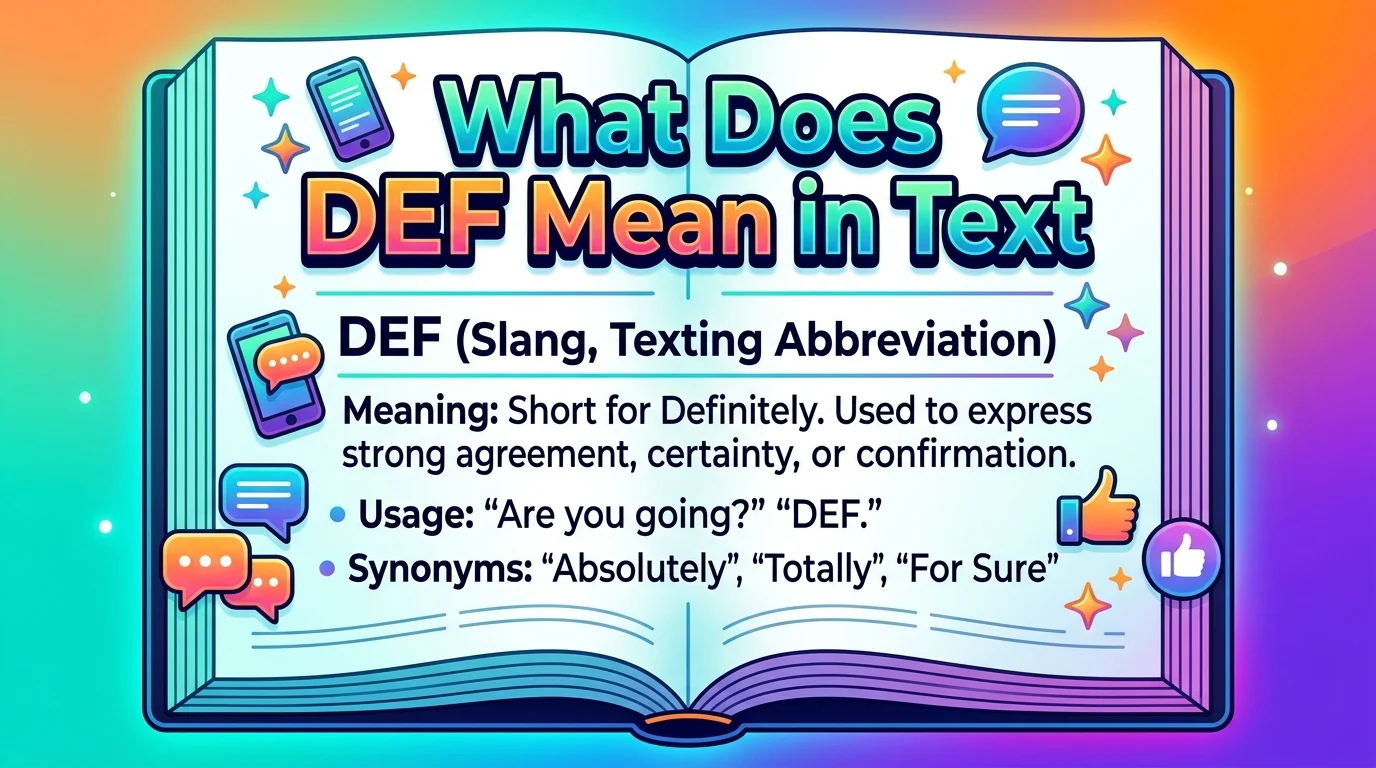
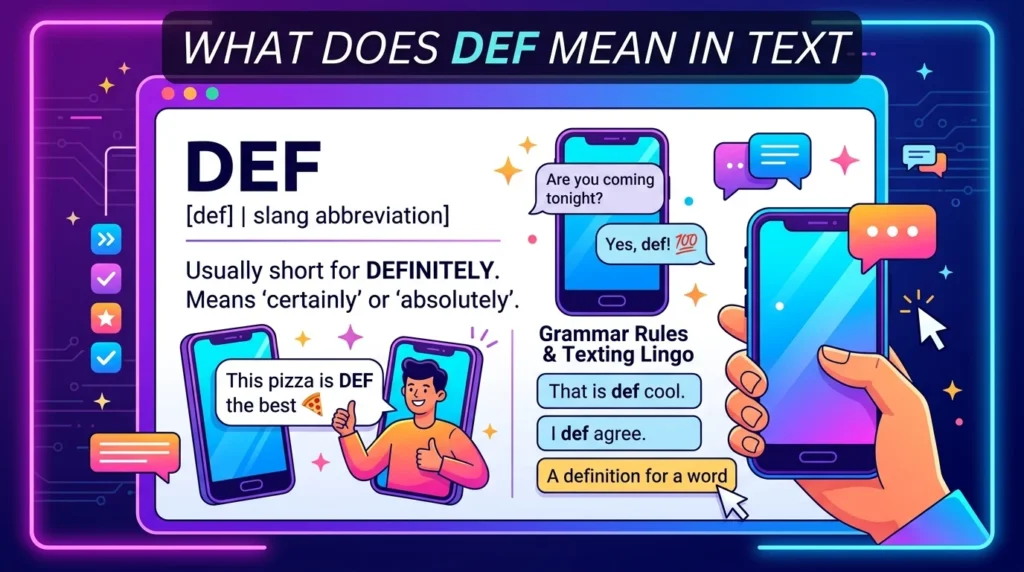
In modern slang, “def” is a shortened form of “definitely.” It’s used to strongly agree with something or confirm something without hesitation.
Quick meaning:
- Def = Definitely
- Used to show strong agreement
- Common in casual texting and social media
Examples:
- “Are you coming tonight?” → “Def!”
- “That movie was good.” → “Def agree.”
- “You down for food?” → “Def, I’m starving.”
It’s short, fast, and expressive—perfect for digital conversations where people type quickly and emotionally.
What Does Gal Mean in Texting
Before diving deeper into “def,” it helps to understand similar slang like “gal.” In texting, “gal” simply means girl, often used in a friendly or affectionate tone.
Meaning in chat:
- Gal = Girl
- Casual, playful, or friendly usage
Examples:
- “That gal is hilarious.”
- “She’s a strong gal.”
- “What’s up, gal?”
While “def” is about agreement, “gal” is about referring to someone in a relaxed, informal way. Both show how language becomes lighter in digital communication.
DEF Meaning in Truck
Outside of texting, DEF has a completely different meaning in the automotive world. It stands for Diesel Exhaust Fluid.
What it is:
- A liquid used in diesel engines
- Helps reduce harmful emissions
- Common in modern trucks and heavy vehicles
Simple explanation:
DEF is not fuel. It is a fluid that helps diesel engines run cleaner by reducing pollution output.
Example:
- “The truck needs DEF refill before the long trip.”
- “Low DEF warning is showing on dashboard.”
This meaning is completely unrelated to slang but often confuses people searching online.
DEF Full Form
The full form of DEF depends on context, which is why confusion happens so often.
Common meanings:
- In texting: Definitely
- In vehicles: Diesel Exhaust Fluid
- In general abbreviation use: Depends on industry or context
So, understanding “def” always requires checking where it is used.
Defo Meaning in Chat
Another popular variation is “defo.” It comes from the same root as “definitely” but is slightly more casual and expressive.
Meaning:
- Defo = Definitely
- More playful and conversational than “def”
Examples:
- “You coming tomorrow?” → “Defo!”
- “That’s a good idea.” → “Defo agree.”
People often choose “defo” when they want their message to feel friendly and relaxed.
Ghi Meaning in Chat
In texting slang, “ghi” is less common and often confusing. In many cases, it appears as:
- A typo
- A shorthand in specific communities
- Or an abbreviation with no universal meaning
In most casual chats, it does not have a widely accepted meaning like “def.” Instead, users often guess its meaning based on context.
Example confusion:
- “ghi?” → might be typo of “hi” or “guy hi”
- Context always matters
Unlike “def,” which has a clear meaning, “ghi” is inconsistent in usage.
DEF Meaning Diesel
As mentioned earlier, in mechanical and transportation contexts, DEF stands for Diesel Exhaust Fluid.
Key points:
- Used in diesel engines
- Reduces emissions
- Required in modern trucks and buses
Why it matters:
Without DEF, many diesel vehicles cannot function properly due to environmental regulations.
So if someone in transport says “DEF is low,” they are not talking about slang—they are talking about engine maintenance.
Def Meaning Definitely
This is the most common texting meaning of def.
Usage:
- Strong agreement
- Confirmation
- Positive emotional response
Examples:
- “You coming?” → “Def.”
- “It was fun.” → “Def was!”
It’s short, punchy, and emotionally direct. That’s why Gen Z and millennials use it so often.
Origin & Background
The slang “def” originated from English abbreviation culture, where long words are shortened for speed and convenience.
Evolution path:
- “Definitely” → “definitely” (spoken shorthand)
- “def” (text abbreviation)
With the rise of SMS, WhatsApp, and social media platforms, people started trimming words to communicate faster.
Cultural influence:
- Hip-hop and street language helped popularize “def” in casual speech
- Social media accelerated its global spread
- Memes and comments made it mainstream
Today, “def” is part of everyday digital vocabulary.
Real-Life Conversations (MANDATORY)
WhatsApp Chat:
Person A: Are you coming to the party?
Person B: Def! Wouldn’t miss it.
Instagram DM:
Person A: That outfit is fire 🔥
Person B: Def appreciate that!
TikTok Comment Section:
Person A: This tutorial actually helped me
Person B: Def saving this video
Text Message:
Person A: You think she likes me?
Person B: Def bro, go for it
Emotional & Psychological Meaning
“Def” is more than just a shortcut—it reflects certainty and emotional confidence.
People use it when they want to:
- Show strong agreement
- Keep conversations fast
- Sound casual but positive
Psychological insight:
It reduces emotional distance in conversations. Instead of saying “I definitely agree,” people say “def,” which feels more natural and less formal.
Personal-style scenario:
Imagine a friend asking if you’ll support their decision. Saying “def” instantly reassures them without sounding overly dramatic or formal.
Usage in Different Contexts
Social Media:
Used in comments, replies, and captions
- “This song is good.” → “Def 🔥”
Friends & Relationships:
Casual agreement or emotional support
- “You got my back?” → “Def.”
Work / Professional Settings:
Rarely used; can feel too informal
Casual vs Serious Tone:
- Casual: “def”
- Serious: “definitely”
When NOT to Use It
Avoid using “def” in:
- Formal emails
- Academic writing
- Job interviews
- Legal or professional documents
Why:
It may look unprofessional or too informal depending on the context.
Common Misunderstandings
Many people confuse:
- “def” with “defeated”
- “def” with technical terms like DEF in vehicles
- “defo” as a different meaning entirely
Key confusion:
Meaning depends entirely on context—not just the word itself.
Comparison Table
| Term | What It Means | How It’s Used | Example | Comparison |
|---|---|---|---|---|
| Def | Definitely | Agreement | “Def coming” | vs formal language |
| Defo | Definitely (casual) | Friendly chat | “Defo yes” | more playful than def |
| DEF | Diesel Exhaust Fluid | Vehicle use | “Check DEF level” | technical vs slang |
| Gal | Girl | Casual reference | “That gal is nice” | unrelated slang |
| Definitely | Full word | Formal use | “I definitely agree” | expanded version of def |
Key Insight: Context is everything. The same letters can carry emotional, casual, or technical meaning depending on where they appear.
Variations / Types (10)
- def (text slang) – means definitely
- defo (chat slang) – casual yes or agreement
- DEF (truck term) – diesel exhaust fluid
- definitely (full form) – formal confirmation
- def meaning slang – agreement expression
- def in chat – quick approval reply
- def abbreviation – shortened word form
- def internet slang – digital communication term
- def casual tone – relaxed agreement style
- def expression – emotional confirmation word
How to Respond When Someone Uses It
Casual replies:
- “Nice!”
- “Cool, def!”
Funny replies:
- “Def or nah? 😂”
- “That was a fast def!”
Mature replies:
- “I agree completely.”
- “That makes sense.”
Respectful replies:
- “Absolutely, I agree with you.”
- “Yes, that’s correct.”
Regional & Cultural Usage
Western culture:
Very common in texting and social media
Asian culture:
Used mainly among younger internet users
Middle Eastern culture:
Growing usage in online chats
Global internet:
Universal slang among Gen Z
Generational differences:
- Gen Z: frequent use
- Millennials: occasional use
- Older generations: less familiar
Is It Safe for Kids?
Yes, “def” is completely safe. It is just slang for “definitely” and contains no harmful or inappropriate meaning. However, kids should still learn when to use formal language in school or professional settings.
FAQs
What does DEF stand for in text?
In texting, DEF stands for “definitely.” It is used to show strong agreement or confirmation in a short and casual way.
What does DEF mean in texts?
In texts, DEF means a quick way of saying “definitely.” People use it to reply fast while still showing full agreement.
What is DEF in Gen Z?
For Gen Z, DEF is slang for “definitely” and is commonly used in chats, memes, and social media replies to express instant approval.
Is DEF slang for definitely?
Yes, DEF is widely used slang for “definitely.” It makes communication faster and more casual in digital conversations.
Is DEF used only in texting?
No, DEF is not only used in texting. It can also appear in informal speech and online comments, especially among younger users.
Is DEF formal or informal?
DEF is informal slang, so it is best used in casual conversations rather than professional or academic writing.
Why do people use DEF instead of definitely?
People use DEF because it is shorter, faster, and easier to type, especially in quick chats or social media replies.
What tone does DEF show in conversation?
DEF usually shows a positive, confident, and agreeing tone, making conversations feel friendly and relaxed.
Can DEF be misunderstood?
Yes, sometimes. Outside texting, DEF can confuse people because it also has technical meanings, like Diesel Exhaust Fluid in vehiclesIs DEF still popular today?
Yes, DEF is still widely used, especially among Gen Z and millennials in casual online communication.
Conclusion
“Def” may look like a small three-letter word, but it carries different meanings depending on where it is used. In texting, it shows strong agreement and emotional certainty, while in technical fields it refers to Diesel Exhaust Fluid. Its flexibility reflects how modern communication evolves for speed and simplicity. Understanding context is the key to using it correctly. When used naturally in chats, “def” adds clarity, warmth, and effortless expression to everyday digital conversations.