
In the fast-paced world of texting and social media, you’ve probably seen someone type “ew” and wondered, what does that even mean? While it may seem like a small, throwaway expression, “ew” carries a lot more nuance than meets the eye. People search for its meaning to avoid misunderstandings, stay up-to-date with trends, or simply understand a friend’s reaction. Misreading “ew” can lead to confusion, embarrassment, or even unintended offense.
This guide dives deep into the meaning, origins, usage, and emotional weight of “ew”, giving you a confident grasp of this tiny but powerful expression.
EW – Quick Meaning
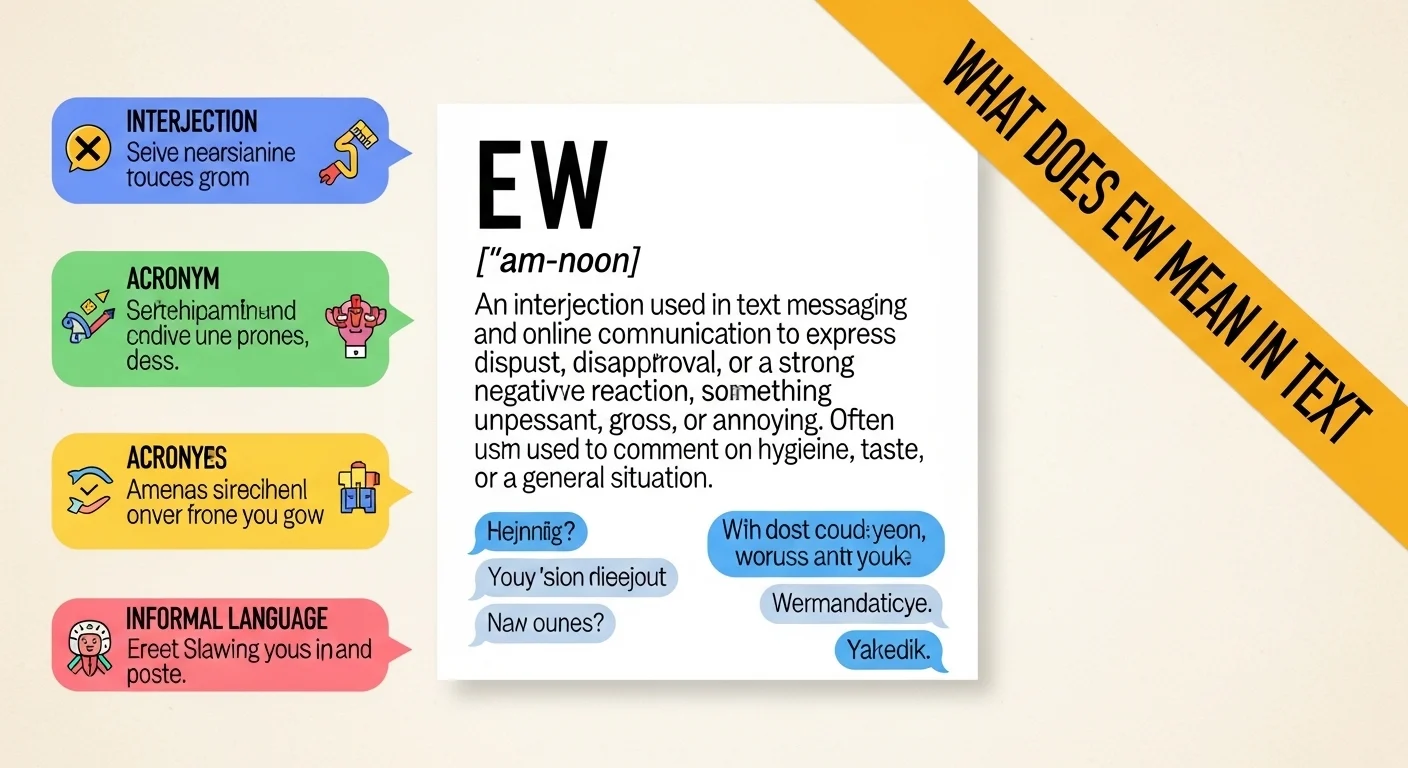
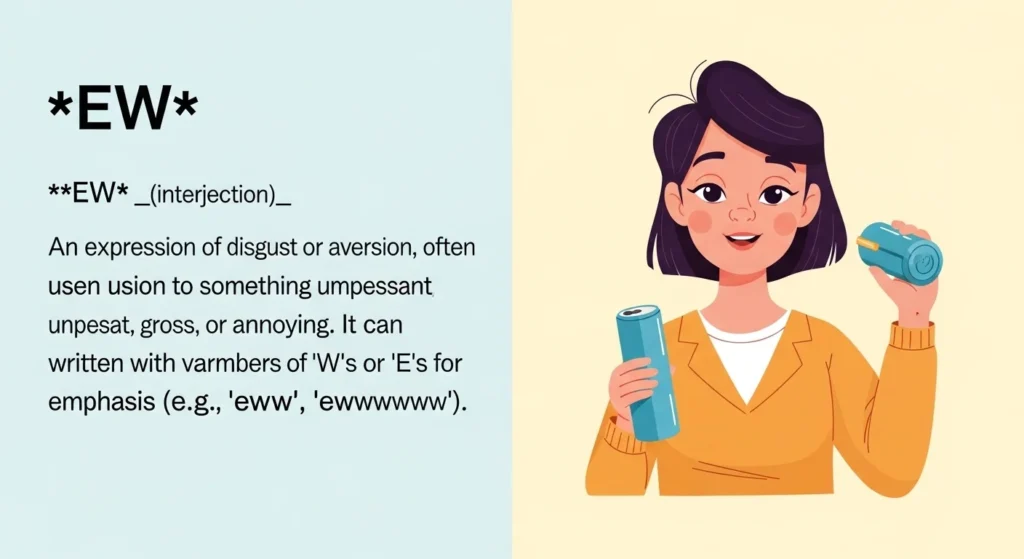
At its core, “ew” is an expression of disgust, distaste, or strong dislike. It’s short, punchy, and universally understood online—but context is everything.
- Definition: A reaction to something gross, awkward, or unpleasant.
- Tone: Casual, often humorous, sometimes exaggerated.
- Emotion: Disgust, mild annoyance, playful rejection.
Examples in texts:
- “You put pineapple on pizza? Ew!”
- “Ew, that shirt is so 2005.”
- “Ew! There’s a spider on the couch!”
It’s simple, but the feeling it conveys is immediate—perfect for the fast-moving pace of digital chats.
Origin & Background
The word “ew” is an onomatopoeic expression. That means it sounds like the feeling it represents—a spontaneous vocalization of disgust.
- Early Usage: While short, expressive words like “yuck” and “ugh” have existed for decades, “ew” gained popularity with internet chat rooms, forums, and early texting.
- Social Media Influence: Platforms like Instagram, TikTok, and Snapchat accelerated its spread. Teens and young adults adopted it as a quick, relatable way to react.
- Evolution: Originally just an audible “gross,” “ew” now appears in memes, GIFs, and even in sarcastic contexts, making it flexible for humor, teasing, or lighthearted disdain.
This small word demonstrates how language adapts to digital culture, shaping the way we express emotions online.
Real-Life Conversations
Here are a few realistic conversations showing how “ew” functions naturally:
WhatsApp Chat
Person A: “I just dropped my lunch on the floor…”
Person B: “Ew! Hope it didn’t land on anything nasty!”
Instagram DM
Person A: “Check out this retro outfit I thrifted 😍”
Person B: “Ew… not your vibe, sorry 😬”
TikTok Comments
User 1: “Tried this new recipe… it’s chocolate with pickles 🤢”
User 2: “EW! Who even thought of that combination?!”
Text Message Between Friends
Person A: “I watched the new horror movie last night.”
Person B: “Ew, you know I hate gore 😭”
These examples show “ew” is versatile—used for playful teasing, genuine disgust, or mild exaggeration.
Emotional & Psychological Meaning
“Ew” is more than a reaction—it’s a window into human emotion. Psychologically, it conveys repulsion or boundary-setting, often in a socially acceptable, non-confrontational way.
- Emotion Expressed: Disgust, discomfort, or playful annoyance.
- Why People Use It: It’s a short, effective way to communicate feelings without long explanations.
- Modern Communication Insight: In digital conversations, where tone and facial expressions are absent, “ew” fills in the emotional gap.
Personal Example:
I once sent a friend a picture of a strange food combination. Her immediate response was “ewww!” I could instantly feel her reaction—without a single word of elaboration. That instant emotional clarity is why “ew” works so well online.
Usage in Different Contexts
Social Media: Memes, comments, reactions to viral content.
Friends & Relationships: Light teasing, expressing distaste for habits or choices.
Work / Professional Settings: Rarely appropriate—can seem unprofessional or dismissive.
Casual vs Serious Tone: Works best in informal chats; tone can be playful, sarcastic, or genuinely disgusted.
When NOT to Use It
- Professional emails or Slack messages—may appear rude.
- Sensitive topics—can come across as mocking.
- Cultural differences—what’s humorous in one context may be offensive in another.
- Texting strangers—tone may be misinterpreted.
Knowing when to hold back is as important as knowing when to type it freely.
Common Misunderstandings
- Literal vs Figurative Meaning: Some take “ew” literally, assuming something is physically gross. Often, it’s just an exaggerated reaction to awkwardness or mild dislike.
- Tone Confusion: Without emojis, “ew” can seem harsher than intended.
- Generational Gap: Older adults might interpret it differently, missing playful nuance.
Comparison Table
| Expression | Meaning | Tone | Example |
|---|---|---|---|
| ew | Disgust / distaste | Casual / playful | “Ew, that food looks gross” |
| yuck | Strong disgust | Literal / straightforward | “Yuck! Don’t touch that” |
| ugh | Frustration / annoyance | Mildly negative | “Ugh, Monday mornings…” |
| gross | Literal disgust | Serious | “Gross, that’s moldy” |
| haha | Humor / amusement | Playful | “Haha, ew… you’re silly” |
Key Insight: While all these expressions show negative feelings, “ew” balances emotional clarity and playfulness, making it uniquely digital-friendly.
Variations / Types
- Eww – Emphasized disgust, usually exaggerated.
- Ewwwww – Stronger reaction, playful or dramatic.
- Ew lol – Disgust mixed with humor.
- Ew 😩 – Expressing disgust with mild frustration.
- Ew 😂 – Playful, not serious.
- Ew no – Firm refusal or rejection.
- Ew gross – Literal disgust.
- Ew yikes – Shocked disgust, often humorous.
- Ew smh – Mild judgment or disappointment.
- Ew stop – Lightly annoyed, asking someone to pause.
Each variation adds emotional subtlety, enhancing meaning beyond the simple “ew.”
How to Respond When Someone Uses It
- Casual Reply: “I know, right? 😂”
- Funny Reply: “Ew? I thought it was fine 😏”
- Mature Reply: “Haha, okay, point taken 😅”
- Respectful Reply: “Got it, thanks for being honest”
Tone matching is key—mirroring emotion keeps the conversation smooth.
Regional & Cultural Usage
- Western Culture: Common in texting, memes, TikTok, and Snapchat. Often playful.
- Asian Culture: Used online; less in formal conversation. Sometimes considered too casual.
- Middle Eastern Culture: Popular among youth on social media; tone-sensitive.
- Global Internet: Universally recognized online, especially among Gen Z.
- Generational Differences: Gen Z and young millennials use it frequently; older generations may prefer “yuck” or “ugh.”
Is It Safe for Kids?
Generally safe, but context matters. It’s a non-offensive expression, though excessive use may promote negative reactions to minor things. Use as a teaching moment for expressing emotions respectfully.
FAQs
1. What does “ew” stand for?
It doesn’t stand for anything—it’s a sound expressing disgust.
2. Is “ew” rude?
Not usually; tone and context determine rudeness.
3. Can “ew” be used sarcastically?
Yes, often for playful teasing or exaggeration.
4. Is it the same as “yuck”?
Similar, but “ew” is more casual and digital-friendly.
5. Should I use “ew” at work?
Best avoided; it can seem unprofessional.
6. Can emojis change “ew”’s meaning?
Absolutely—😩 or 😂 can change tone from serious to playful.
7. Who uses “ew” most?
Primarily teens, young adults, and social media users.
Conclusion
Understanding “ew” goes beyond the letters—it’s about emotion, context, and culture. This tiny word allows people to express disgust, humor, or playful judgment instantly, filling the emotional gap that text messages often leave. Use it confidently, match the tone to your audience, and you’ll navigate modern digital conversations with ease.