
If you have recently seen someone type “OCS” in a message, comment section, or social media post, you are not alone in wondering what it means. Modern texting culture moves fast, and abbreviations often carry different meanings depending on the platform, tone, and relationship between people.
The phrase “what does OCS mean in text” has become a common search because many people encounter it without context. One friend may use it casually in a group chat, while another uses it in gaming, fandom culture, or online storytelling communities. That confusion is exactly why understanding the emotional tone and real-life usage matters.
In digital conversations, abbreviations are not just shortcuts anymore. They often reflect identity, humor, creativity, or even emotional distance. Knowing how “OCS” works in different situations can help you avoid awkward misunderstandings and communicate more naturally online.
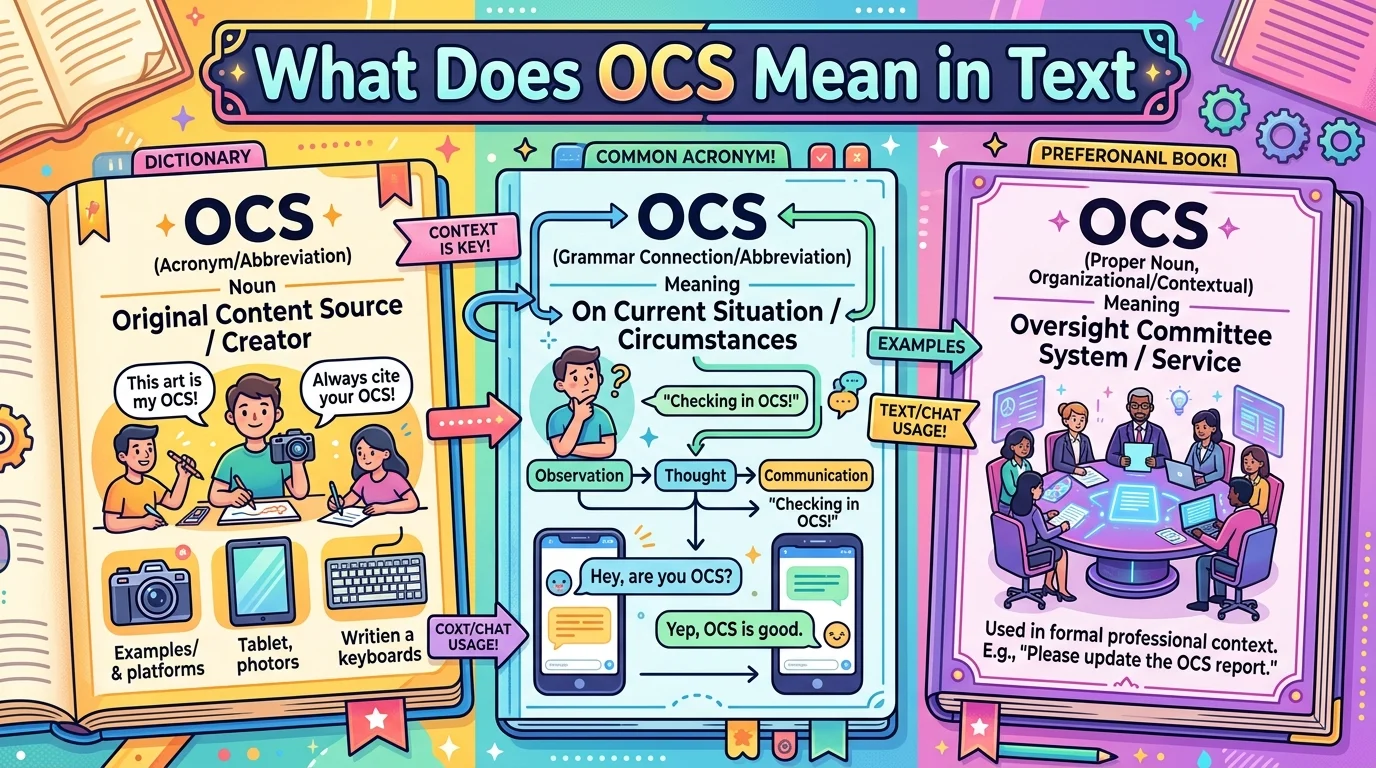
OCS Meaning in Text – Quick Meaning
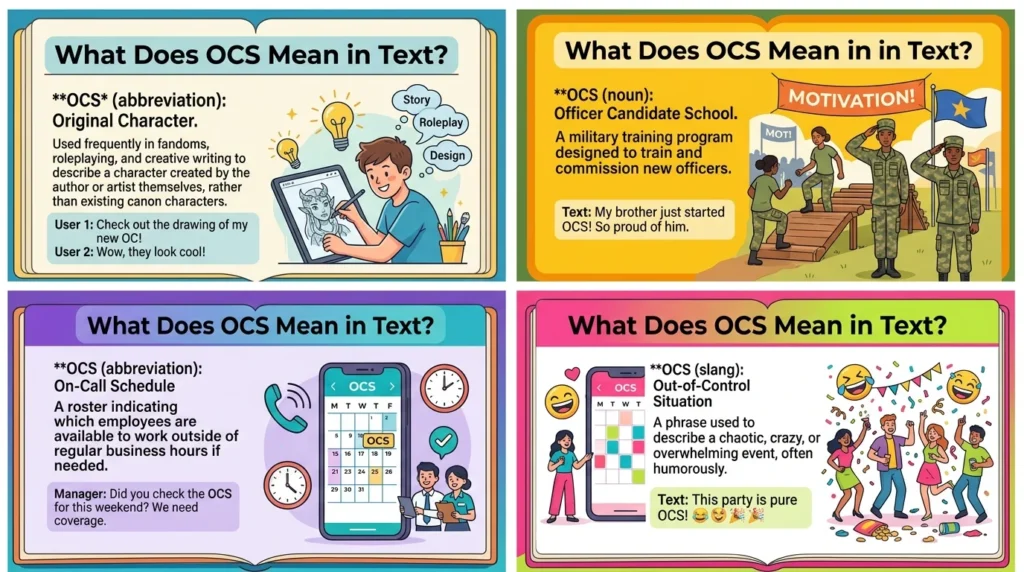
In texting and online communication, OCS most commonly stands for:
- Original Characters
- Used in fandoms, roleplay communities, gaming spaces, and creative discussions
- Refers to characters someone personally created
People often use it when talking about art, storytelling, anime, gaming, or social media creativity.
Quick Examples
“I finally finished drawing my OCS.”
“Your OCS look amazing in that animation.”
“She writes entire backstories for her OCS.”
In some rare cases, OCS can also mean different things depending on the context, but “Original Characters” is by far the most common internet meaning today.
Origin & Background
The rise of OCS is deeply connected to internet creativity culture.
Long before TikTok and Instagram became dominant, online communities on forums, DeviantArt, Tumblr, and fanfiction websites encouraged users to invent their own characters. Instead of only discussing famous fictional heroes, people began creating personal characters with unique personalities, emotional struggles, and visual styles.
That is where the term “Original Characters” became popular.
As social media evolved, OCS became more than fictional drawings. They became emotional extensions of people’s identities. Many users spent years developing their characters, giving them histories, relationships, and symbolic meanings.
Social Media Influence
Platforms like TikTok and Instagram accelerated OCS culture because visual storytelling became easier to share. Today, people use OCS for:
- Anime edits
- Gaming lore
- Storytelling videos
- Digital art
- Character roleplay
- Fantasy world-building
For many creators, OCS are deeply personal. They often represent emotions people struggle to express directly in real life.
Real-Life Conversations
WhatsApp Conversation
Person A:
Did you post that character sketch today?
Person B:
Yeah lol, it’s one of my OCS from high school.
Person A:
Honestly the design looks professional now.
Instagram DM
Person A:
Your OCS have such emotional backstories.
Person B:
Thanks. I think I process real feelings through them sometimes.
TikTok Comments
Person A:
Wait these are your OCS??
Person B:
Yep 😭 Been building this universe for 3 years.
Text Message
Person A:
Why are you always drawing the same people?
Person B:
Those are my OCS. They’re part of a story I’m writing.
Emotional & Psychological Meaning
At first glance, OCS may seem like simple internet slang. In reality, it often carries strong emotional meaning.
People create original characters because stories help humans process emotions safely. Many individuals use OCS to explore:
- Identity
- Loneliness
- Confidence
- Trauma
- Romance
- Personal dreams
In online spaces, OCS become emotional mirrors. Someone who struggles to express sadness openly may create a character who reflects those feelings indirectly.
This is especially common among teenagers and creative young adults.
A Realistic Personal-Style Scenario
Imagine a college student who feels socially isolated after moving to a new city. Instead of openly discussing their emotions, they begin designing an OC who also feels disconnected but eventually finds belonging. Over time, that character becomes a safe emotional outlet.
That is why many creators become protective of their OCS. To outsiders, they are fictional. To creators, they often hold emotional history.
Usage in Different Contexts
Social Media
On TikTok, Instagram, and Tumblr, OCS are often part of creative identity.
People post:
- Character art
- Story animations
- Outfit designs
- Emotional edits
- Voice acting clips
Example:
“Rate my fantasy OCS.”
Friends & Relationships
Friends sometimes discuss OCS casually like real people.
Example:
“My OCS would never survive in your universe.”
This playful interaction builds community and emotional bonding.
Work / Professional Settings
Using “OCS” in professional environments can create confusion unless everyone understands fandom or creative terminology.
In workplaces, it is usually better to say:
- “Original character designs”
- “Custom fictional characters”
- “Creative character concepts”
Casual vs Serious Tone
OCS can feel:
- Casual in fandom spaces
- Deeply emotional in storytelling communities
- Professional in art and animation discussions
Tone depends heavily on context.
When NOT to Use It
There are situations where using OCS may confuse people.
Avoid Using It:
- In formal emails
- During academic presentations without explanation
- With older audiences unfamiliar with internet slang
- In serious business conversations
Cultural Sensitivity Matters
Some people view fandom language as immature if they do not understand internet culture. While that perception is changing, context still matters.
Common Misunderstandings
Many people misunderstand OCS because abbreviations can have multiple meanings.
Common Confusions
Thinking OCS Means a Relationship Term
Some assume it is romantic slang. Usually, it is not.
Assuming It Only Refers to Anime
While anime communities popularized the term, OCS exist in:
- Gaming
- Comics
- Fantasy writing
- Animation
- Roleplay communities
Confusing Fiction With Reality
People sometimes joke about creators being “too attached” to their OCS. But emotional storytelling has always been part of human psychology.
Comparison Table
| Topic | Meaning |
|---|---|
| What Does OCS Mean | Usually stands for “Original Characters” |
| How to Use OCS | Used when discussing self-created fictional characters |
| Examples of OCS | Character art, fantasy personas, roleplay identities |
| OCS vs Fanfiction Characters | OCS are original creations, not existing characters |
| OCS vs Avatars | OCS usually have deeper stories and personalities |
| OCS vs Personas | Personas represent the creator more directly |
Key Insight
OCS are not just internet slang. They represent how digital culture allows people to express creativity, identity, and emotion in highly personal ways.
Variations / Types
OCS Meaning
Refers to “Original Characters” created by an individual.
OCS in Text
Usually appears in chats about art, fandoms, or storytelling.
OCS Abbreviation
A shortened internet term widely used online.
OCS Slang
Creative community slang connected to fandom culture.
OCS in Chat
Common in Discord servers, group chats, and gaming communities.
Anime OCS Meaning
Characters designed specifically for anime-inspired worlds.
Gaming OCS Meaning
Custom characters built for gaming lore or roleplay.
TikTok OCS Meaning
Characters used in edits, animations, and storytelling trends.
OCS Meme Usage
Funny posts where creators joke about their fictional characters.
OCS Art Meaning
Artwork centered around personally designed fictional people.
How to Respond When Someone Uses It
Casual Replies
- “Your OCS look really creative.”
- “That backstory is actually interesting.”
- “I love the design details.”
Funny Replies
- “Your OCS need therapy honestly.”
- “Why do all your OCS have tragic childhoods?”
- “These characters have more lore than movies.”
Mature Replies
- “You clearly put emotional depth into these characters.”
- “Your storytelling style feels very personal.”
- “That character development is impressive.”
Respectful Replies
- “Thanks for sharing your creativity.”
- “I can tell these OCS mean a lot to you.”
- “You have a strong imagination.”
Regional & Cultural Usage
Western Culture
In Western internet culture, OCS are strongly linked to:
- Fandom spaces
- Comic communities
- Gaming culture
- Independent artists
People often openly share their characters publicly.
Asian Culture
In Asian digital spaces, especially anime communities, OCS are connected to:
- Manga-inspired storytelling
- VTuber culture
- Character design aesthetics
- Roleplay communities
Middle Eastern Culture
Creative communities are growing rapidly in Middle Eastern online spaces. However, public sharing may sometimes be more private or selective due to cultural expectations around self-expression.
Global Internet Usage
Today, OCS are part of worldwide internet language. Platforms like TikTok, Discord, and Instagram created a shared digital culture where creative slang spreads globally within days.
Generational Differences
Gen Z
- Uses OCS naturally
- Views character creation as self-expression
- Often emotionally attached to fictional worlds
Millennials
- More familiar with older fandom forums
- May use OCS in gaming or fanfiction communities
- Often understand the term through internet history
Is It Safe for Kids?
Generally, yes.
OCS culture is mostly creative and artistic. Many children and teenagers use original characters for:
- Drawing
- Storytelling
- Imagination development
- Creative confidence
However, parents should still monitor online communities because some fandom spaces may contain mature themes depending on the platform.
FAQs
What does OCS stand for in texting?
OCS usually stands for “Original Characters,” referring to fictional characters someone created themselves.
Is OCS only used in anime communities?
No. It is also common in gaming, digital art, writing, roleplay, and fandom culture.
Why are people emotionally attached to their OCS?
Many creators use characters to express emotions, identity, and personal experiences indirectly.
Is OCS considered slang?
Yes. It is internet slang commonly used in online creative spaces.
Can OCS be used professionally?
Yes, especially in animation, design, writing, and game development discussions.
What is the difference between an OC and a fanfiction character?
An OC is completely original, while a fanfiction character is based on an existing fictional universe.
Why do younger people use OCS so much?
Modern internet culture encourages creativity, identity-building, and emotional storytelling through digital platforms.
Conclusion
Understanding what does OCS mean in text goes far beyond learning a simple abbreviation. The term reflects modern creativity, emotional storytelling, and the way people express identity online. For many users, OCS are not just fictional characters but meaningful emotional outlets connected to imagination and personal experiences. Whether you encounter the term in TikTok comments, gaming chats, or fandom spaces, knowing its deeper context helps conversations feel more natural, respectful, and connected in today’s digital world.