
If you’ve ever come across the word “tis” in a message and paused for a second thinking, What does this even mean in text?, you’re definitely not alone.
In today’s fast-moving digital world, even a three-letter word can create confusion. People see “tis” in chats, captions, or comments and instantly wonder if it’s a typo, slang, or some hidden meaning they’re missing out on.
The truth is simple—but also surprisingly interesting.
“Tis” is not just random internet noise. It carries a mix of old English roots and modern casual usage that has slowly found its way back into texting culture. And depending on context, it can feel poetic, humorous, dramatic, or even slightly confusing.
This guide will break it all down in a natural, human way so you never feel lost when you see it again.
2️⃣ “TIS” – Quick Meaning in Text
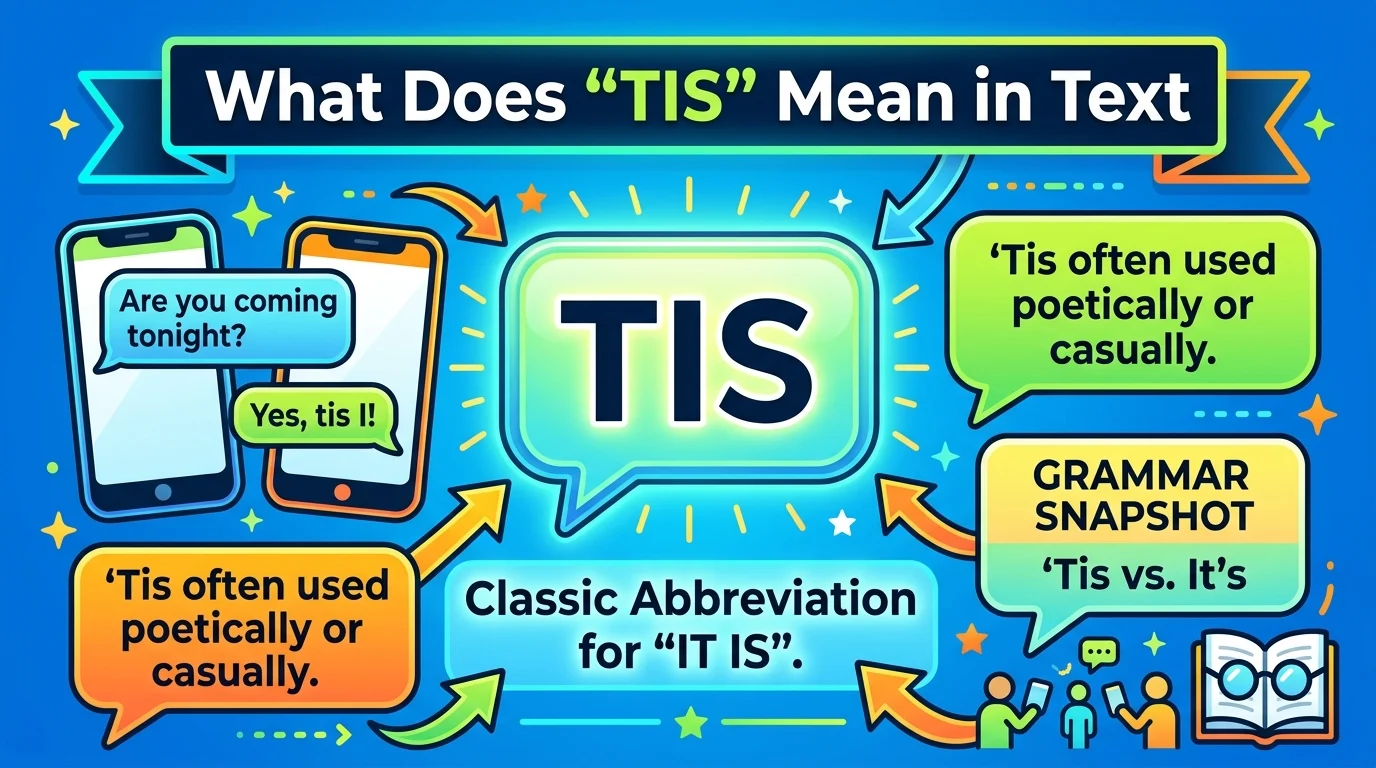
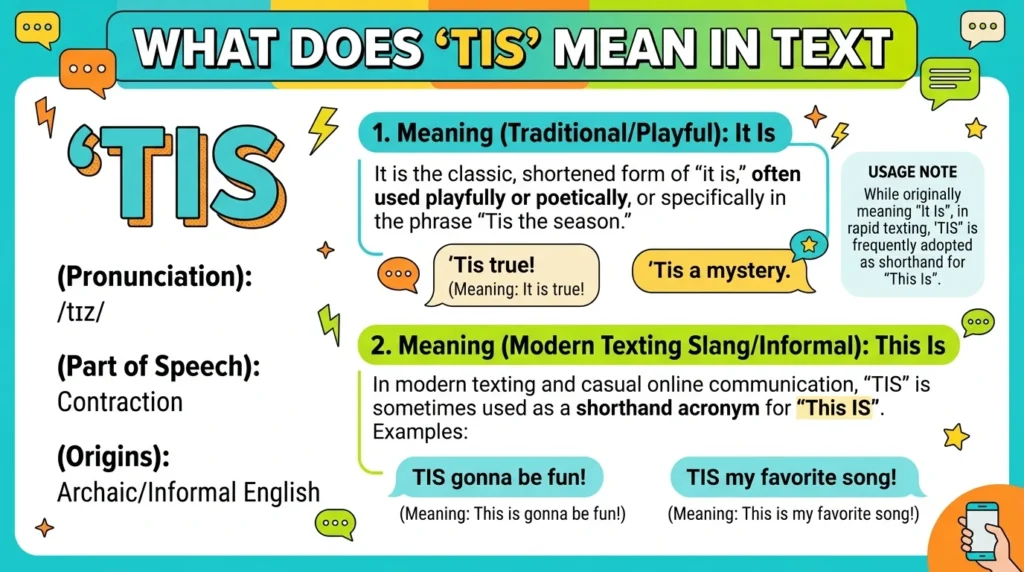
In most modern contexts, “tis” generally means:
- A shortened or stylized form of “it is”
- Sometimes used for emphasis, tone, or aesthetic expression
- Often found in poetic, dramatic, or casual texting styles
Simple examples:
- “Tis what it is.”
- “Tis a beautiful day.”
- “Tis fine, don’t worry.”
It is not a standard modern abbreviation like “LOL” or “BRB.” Instead, it carries tone and personality more than pure meaning.
3️⃣ Origin & Background of “TIS”
To understand “tis,” we need to step back in time.
The word originally comes from Old English, where “’tis” was a contraction of “it is.” It was commonly used in literature, poetry, and Shakespearean English.
For example:
- “’Tis the season to be jolly.”
- “’Tis better to have loved and lost…”
Fast forward to today, social media has revived many old expressions. People now use “tis” not because they are writing formally, but because it adds:
- A dramatic tone
- A poetic feeling
- A soft emotional emphasis
On platforms like Instagram captions, TikTok comments, and aesthetic bios, “tis” has become a stylistic choice rather than a grammatical necessity.
It evolved from literature → casual writing → internet aesthetic language.
4️⃣ Real-Life Conversations Using “TIS”
Here’s how “tis” actually appears in everyday digital conversations.
💬 WhatsApp Chat
Person A: Are you still coming to the meetup?
Person B: Tis what it is, I might be a bit late 😅
📱 Instagram DM
Person A: Your photo looks amazing!
Person B: Tis just natural lighting doing its magic ✨
🎵 TikTok Comment Section
User 1: Why is this song so addictive?
User 2: Tis the curse of good music 😂
💬 Text Message
Friend: Are you upset?
You: Tis fine, don’t overthink it.
In all these cases, “tis” is not about grammar. It’s about tone—softening emotion or adding personality.
5️⃣ Emotional & Psychological Meaning of “TIS”
“Tis” is small, but emotionally expressive.
People use it because:
- It feels softer than “it is”
- It adds emotional distance or calmness
- It can make a statement feel poetic or ironic
- It helps people sound less direct in sensitive conversations
For example, instead of saying:
“It is fine.”
Someone might say:
“Tis fine.”
The second version feels less harsh, more detached, and slightly philosophical.
Real-life scenario:
Imagine someone cancels plans last minute. Instead of reacting emotionally, you text:
“Tis alright, we’ll do it another time.”
It doesn’t sound angry. It sounds composed, slightly disappointed, but emotionally controlled.
That’s why “tis” works so well in modern communication—it hides strong emotion behind a calm surface.
6️⃣ Usage in Different Contexts
📱 Social Media
Used in captions and comments for aesthetic or dramatic effect:
- “Tis the season of overthinking”
- “Tis a soft kind of happiness”
💛 Friends & Relationships
Used to soften emotional tone:
- “Tis okay, I understand”
- “Tis what it is between us”
💼 Professional Settings
Rare, but may appear jokingly in informal workplace chats:
- “Tis done, finally submitted the report”
🗣️ Casual Conversations
Most common usage:
- “Tis fine”
- “Tis what I expected”
The tone changes based on context—serious, funny, or poetic.
7️⃣ When NOT to Use “TIS”
Even though “tis” is flexible, it doesn’t fit everywhere.
Avoid using it in:
- Formal emails
- Academic writing
- Legal or professional documents
- Serious complaints or official communication
Why?
Because it may sound unclear or unprofessional.
For example:
❌ “Tis urgent that you respond.”
✔️ “It is urgent that you respond.”
Clarity always wins in serious communication.
8️⃣ Common Misunderstandings About “TIS”
Many people misunderstand “tis” in texting:
❌ Mistake 1: Thinking it is a typo
It’s not. It’s intentional.
❌ Mistake 2: Confusing it with “this”
It does not mean “this.”
❌ Mistake 3: Assuming it’s modern slang
It actually comes from old English.
❌ Mistake 4: Thinking it always sounds formal
It can actually sound casual or playful depending on context.
The biggest confusion is tone—it can feel serious or humorous depending on how it’s used.
9️⃣ Comparison Table
| Term | Meaning Intent | Usage Intent | Example |
|---|---|---|---|
| Tis meaning in text | “It is” (stylized form) | Adds tone or emotion | “Tis fine” |
| How to use tis | Replace casual “it is” | For aesthetic or emotional expression | “Tis a good day” |
| Examples of tis | Context-based usage | Shows tone variation | “Tis what it is” |
| Tis vs It is | Informal vs formal | “Tis” is expressive, “it is” is neutral | “Tis okay” vs “It is okay” |
Key Insight:
“Tis” is less about grammar and more about emotional tone. It changes how a sentence feels, not just what it means.
🔟 Variations & Related Forms of “TIS”
Here are common related expressions:
1. ’Tis
Meaning: Old contraction of “it is”
Use: Literary or poetic writing
2. Tis fine
Meaning: Everything is okay
Use: Casual reassurance
3. Tis what it is
Meaning: Acceptance of situation
Use: Emotional resignation
4. Tis okay
Meaning: Everything is acceptable
Use: Comforting tone
5. Tis the season
Meaning: Time of year reference
Use: Holiday context
6. Tis life
Meaning: That’s how life is
Use: Philosophical tone
7. Tis done
Meaning: Task completed
Use: Informal update
8. Tis true
Meaning: Something is correct
Use: Agreement
9. Tis funny
Meaning: Something is humorous
Use: Light reaction
10. Tis enough
Meaning: Something is sufficient
Use: Closure or satisfaction
1️⃣1️⃣ How to Respond When Someone Uses “TIS”
😄 Casual Replies
- “Haha, true!”
- “Exactly!”
- “Same here”
😂 Funny Replies
- “Tis the vibe today 😂”
- “Tis chaos, honestly”
🙂 Mature Replies
- “I understand, it makes sense.”
- “That’s fair enough.”
💬 Respectful Replies
- “Got it, no worries.”
- “I see what you mean.”
Your response should always match the emotional tone of the conversation.
1️⃣2️⃣ Regional & Cultural Usage
🌍 Western Culture
Used more often in aesthetic writing, memes, and poetic captions.
🌏 Asian Digital Culture
Popular in Instagram captions and expressive texting among youth.
🌙 Middle Eastern Online Usage
Less common, but appears in English-speaking chats or social media posts.
🌐 Global Internet Usage
Mostly used for tone, humor, or stylistic expression.
👶 Gen Z vs Millennials
- Gen Z: Uses it playfully, ironically, or aesthetically
- Millennials: Rare usage, often nostalgic or humorous
1️⃣3️⃣ Is “TIS” Safe for Kids?
Yes, “tis” is completely safe.
It has no offensive meaning and is simply a stylistic expression derived from old English. However, children may misunderstand it if they are unfamiliar with its context.
1️⃣4️⃣ FAQs
1. What does “tis” mean in text?
It means “it is,” often used in a stylized or emotional way.
2. Is “tis” slang?
Not exactly. It’s more of an old English contraction used stylistically.
3. Is “tis” formal or informal?
Informal, often used in casual or creative writing.
4. Does “tis” mean “this”?
No, it does not mean “this.”
5. Why do people use “tis” online?
To add tone, emotion, or a poetic feel to messages.
6. Is “tis” still correct English?
Yes, but mainly in historical or stylistic contexts.
7. Can I use “tis” in professional writing?
No, it’s better suited for informal communication.
Conclusion
Understanding “tis” in text is less about grammar and more about emotion, tone, and expression. It is a simple contraction of “it is,” but in modern digital communication, it carries a soft, poetic, or sometimes humorous feeling. People use it to sound expressive rather than formal. Once you recognize its purpose, it becomes easy to read conversations more naturally and confidently. Instead of confusion, you now see intention behind the word, making online communication feel clearer and more human.